Shandong Fengtu IOT Technology Co., Ltd
Sales Manager:Ms. Emily Wang
Cel,Whatsapp,Wechat:+86 15898932201
Email:info@fengtutec.com
Add:No. 155 Optoelectronic Industry Accelerator, Gaoxin District, Weifang, Shandong, China


Sales Manager:Ms. Emily Wang
Cel,Whatsapp,Wechat:+86 15898932201
Email:info@fengtutec.com
Add:No. 155 Optoelectronic Industry Accelerator, Gaoxin District, Weifang, Shandong, China
time:2026-08-19 09:13:09 source:Weather Station viewed:28 time
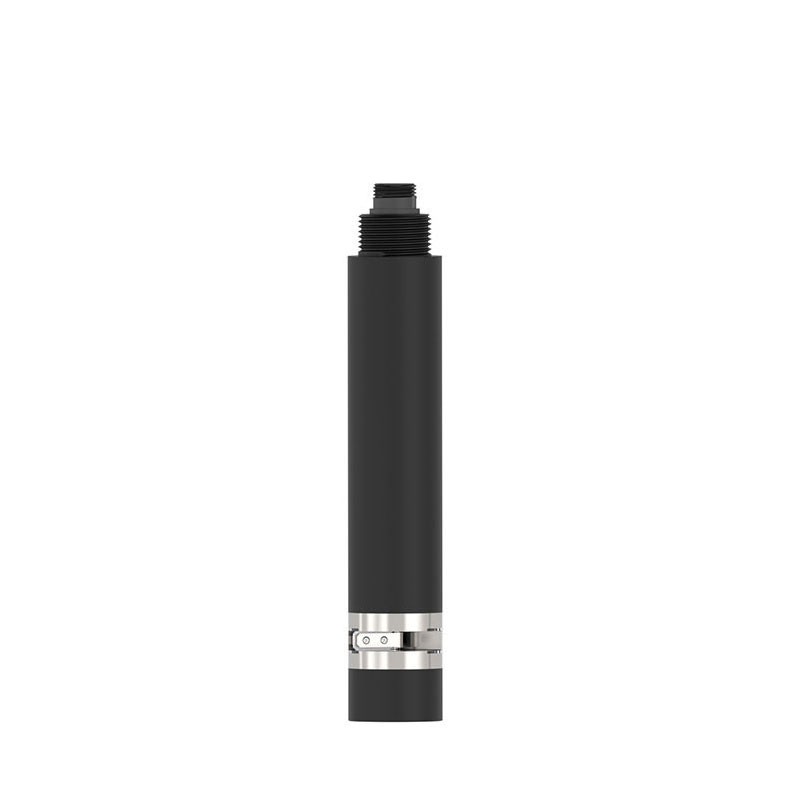
Biochemical oxygen demand sensor employs a UV254 dual-light source detection system, automatically handling turbidity and temperature compensation. BOD values are calculated from COD, allowing for simultaneous monitoring of multiple water quality indicators. It is suitable for online monitoring of wastewater and river water quality.
Biochemical oxygen demand sensor utilizes a UV254 absorption method dual-light source measurement structure. The device internally houses two independent light sources: one dedicated to COD detection, and the other for turbidity acquisition. The probe simultaneously collects water temperature data and performs temperature compensation calculations. BOD values are calculated from COD data using a built-in algorithm, enabling a single probe to simultaneously monitor three water quality indicators.
Dissolved organic matter in water can absorb 254nm ultraviolet light. The sensor calculates the COD concentration by detecting changes in the transmittance of the light source as it passes through the water. A separate turbidity optical path captures light loss caused by suspended particles in the water in real time, automatically compensating for turbidity in the COD detection results to eliminate data interference from turbid water. A temperature sensor continuously collects the on-site water temperature, correcting measurement deviations caused by temperature changes and improving data stability under complex conditions. This sensor has a default COD measurement range of 0-1000 mg/L, a BOD range of 0-400 mg/L, a turbidity detection range of 0-400 NTU, a COD and BOD resolution of 0.1 mg/L, and a turbidity resolution of 0.1 NTU. The overall measurement accuracy reaches ±5%, and the temperature detection accuracy is ±0.3℃, meeting the detection requirements of most conventional wastewater and surface water.
Traditional water quality monitoring projects require the separate installation of multiple independent monitoring devices for COD, turbidity, and BOD. This results in high equipment procurement costs, cumbersome on-site wiring, installation, and commissioning processes, and the need for separate maintenance of different probes later on. Biochemical oxygen demand sensor integrates multiple detection units, simplifying on-site equipment deployment. The probes output standard digital signals, allowing direct connection to water quality monitoring platforms and PLC control systems. It can be directly deployed to locations such as sewage outlets, wastewater treatment ponds, and river networks. The reagent-free optical detection method does not generate secondary pollutants, and the overall maintenance workload is lower compared to chemical detection equipment. It is suitable for projects requiring long-term, uninterrupted in-situ water quality monitoring, providing continuous and reliable raw monitoring data for water environment management.
Ultrasonic wind speed sensor is an instrument for measuring wind speed, which uses the propagation and reflection of ultrasonic waves to measure the speed of wind. This sensor is widely used in wind energy, meteorology, air flow measurement, and other scientific experiments. In the following article...
Ventilation parameters such as airflow and air volume are critical to mine safety and they must be accurately measured and controlled. The use of portable anemometers ensures that these parameters can be measured with the required accuracy, thus providing a strong guarantee for safe mine production....
Water Level Monitoring Station is a technological facility that uses low-power intelligent sensing devices as its core to continuously monitor the water levels of rivers and lakes,This system provides decision support for flood control, disaster reduction, and water resource management by accurately collecting hydrological data....
The quality of air directly affects people's lives and health. People can detect changes in air quality through their senses and take appropriate measures accordingly. Clean air helps to improve people's health and quality of life. Therefore, we should pay attention to the air quality proble...


 Skype
Skype
 whatsapp
 mail
mail