Shandong Fengtu IOT Technology Co., Ltd
Sales Manager:Ms. Emily Wang
Cel,Whatsapp,Wechat:+86 15898932201
Email:info@fengtutec.com
Add:No. 155 Optoelectronic Industry Accelerator, Gaoxin District, Weifang, Shandong, China


Sales Manager:Ms. Emily Wang
Cel,Whatsapp,Wechat:+86 15898932201
Email:info@fengtutec.com
Add:No. 155 Optoelectronic Industry Accelerator, Gaoxin District, Weifang, Shandong, China
time:2023-11-24 17:12:19 source:Weather Station viewed:960 time
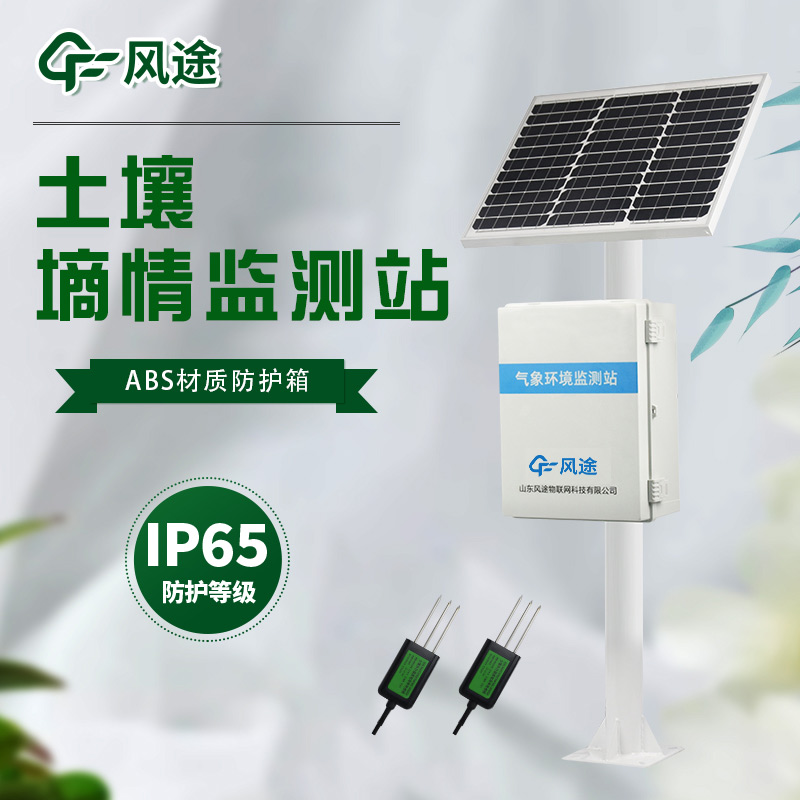
In today's agricultural production, moisture monitoring system is playing an increasingly important role. Like a guardian, it keeps an eye on the condition of the soil and provides farmers with timely and accurate information to help them rationally utilize water resources and improve the yield and quality of crops. Moisture monitoring system plays an important role in safeguarding agricultural production and ecological security, but there are still some areas that need to be improved. Specifically including:
Insufficient monitoring stations: at present, the number of moisture monitoring stations in most areas of the country is small and the coverage is not wide enough, resulting in incomplete monitoring data that cannot accurately reflect the actual situation of soil moisture. Therefore, it is necessary to increase the number and coverage of monitoring stations to improve the accuracy and real-time data collection.
Poor quality of monitoring data: Due to the differences in climatic conditions and soil types in different regions, there is a need to classify and standardize monitoring data from different regions to improve the comparability and accuracy of the data. In addition, the management and supervision of data quality need to be strengthened to ensure the authenticity and reliability of the data.
Lack of unified standards and norms: At present, there is a lack of unified standards and norms for the construction and management of moisture monitoring system in China, which leads to difficulties in data exchange and sharing between different regions. Therefore, it is necessary to formulate relevant standards and norms to standardize the technology and process of data collection, transmission, processing and application.
With the continuous progress of science and technology, moisture monitoring systems will also usher in new development opportunities. In the future, we will see more intelligent and automated monitoring systems that can realize accurate prediction and early warning. At the same time, with the continuous development of Internet of Things technology, the moisture monitoring system will pay more attention to the integration with other agricultural information systems to realize data sharing and collaborative application. In addition, as people's awareness of environmental protection increases, moisture monitoring systems will also pay more attention to eco-efficiency and sustainable development.
A visibility detector is a device used to measure atmospheric visibility. It helps meteorologists, traffic controllers, pilots, and others to understand the current visibility conditions in the atmosphere so that they can make decisions accordingly.In meteorology, visibility is a key concept that de...
It employs a fluorescence detection principle, leveraging the absorption and emission peaks of soluble oil spectra for accurate detection. Supporting RS485 communication output, it boasts high anti-interference capabilities and stability, making it suitable for various industries' online w...
The negative oxygen ion monitoring system is a monitoring station that automatically collects air cleanliness index data in tourist scenic spots and ecological parks (such as artificial wetlands, ecological scenic spots, botanical gardens, etc.). ).Monitor the negative oxygen ions, temperature, humidity, PM2.5 and other environmental quality parameters in scenic spots....
Sensor technology is developing rapidly and is widely used, especially in the field of consumer electronics. In agriculture, however, the pace of application of this technology has been relatively slow. Modern greenhouses, for example, are typically equipped with only one sensor per 1,000 square met...


 Skype
Skype
 whatsapp
 mail
mail