Shandong Fengtu IOT Technology Co., Ltd
Sales Manager:Ms. Emily Wang
Cel,Whatsapp,Wechat:+86 15898932201
Email:info@fengtutec.com
Add:No. 155 Optoelectronic Industry Accelerator, Gaoxin District, Weifang, Shandong, China


Sales Manager:Ms. Emily Wang
Cel,Whatsapp,Wechat:+86 15898932201
Email:info@fengtutec.com
Add:No. 155 Optoelectronic Industry Accelerator, Gaoxin District, Weifang, Shandong, China
time:2024-01-31 17:25:44 source:Weather Station viewed:954 time
As the air quality problem becomes increasingly serious, real-time monitoring of air quality is particularly important. By building micro-monitoring stations, we can achieve real-time monitoring of air quality and timely detection of sources of pollution in the atmosphere. The application of this technology will help us better understand and respond to the problem of air pollution.
The micro-monitoring station is characterised by high accuracy and stability, and can monitor air quality in a 24/7 and all-round manner. At the same time, the monitoring platform can automatically send the monitoring data to all levels and departments so that timely response measures can be taken. This approach of "accurate monitoring, precise prediction, precise traceability and subtle control" helps us to achieve air pollution prevention and control in a more effective way.
More importantly, this approach can provide quantitative decision support to enterprises. In the traditional emission reduction work, many enterprises often face the dilemma of "one size fits all". Through the micro-monitoring station, we can accurately understand the emission situation of each enterprise, and provide enterprises with personalised emission reduction plans. This will not only help enterprises achieve sustainable development, but also help society as a whole to achieve green transformation.
Refined grid monitoring can also help us understand the distribution and development trend of pollutants in real time and identify key pollution sources in a timely manner. This will enable us to propose more targeted prevention and control measures and improve the efficiency and effectiveness of air pollution prevention and control.
By building micro-monitoring stations to carry out real-time air quality monitoring, we can tackle air pollution more effectively. This technology will not only help achieve precise prevention and control, but also provide quantitative decision-making support for enterprises and promote green development for the whole society.
As the air quality problem becomes more and more serious, real-time monitoring of air quality is particularly important. Through the construction of micro-monitoring stations, we can achieve real-time monitoring of air quality and timely detection of air pollution sources. The application of this technology will help us better understand and respond to the problem of air pollution.
The micro-monitoring station is characterised by high precision and stability, and can monitor air quality in a 24/7 and all-round manner. At the same time, the monitoring platform can automatically send the monitoring data to all levels and departments so that timely response measures can be taken. This approach of "accurate monitoring, precise prediction, precise traceability and subtle control" helps us to achieve air pollution prevention and control in a more effective way.
More importantly, this approach can provide quantitative decision support to enterprises. In the traditional emission reduction work, many enterprises often face the dilemma of "one size fits all". Through the micro-monitoring station, we can accurately understand the emission situation of each enterprise, and provide enterprises with personalised emission reduction plans. This will not only help enterprises achieve sustainable development, but also help society as a whole to achieve green transformation.
Refined grid monitoring can also help us understand the distribution and development trend of pollutants in real time and identify key pollution sources in a timely manner. This will enable us to propose more targeted prevention and control measures and improve the efficiency and effectiveness of air pollution prevention and control.
By building micro-monitoring stations to carry out real-time air quality monitoring, we can tackle air pollution more effectively. This technology will not only help achieve precise prevention and control, but also provide quantitative decision-making support for enterprises and promote green development for the whole society.
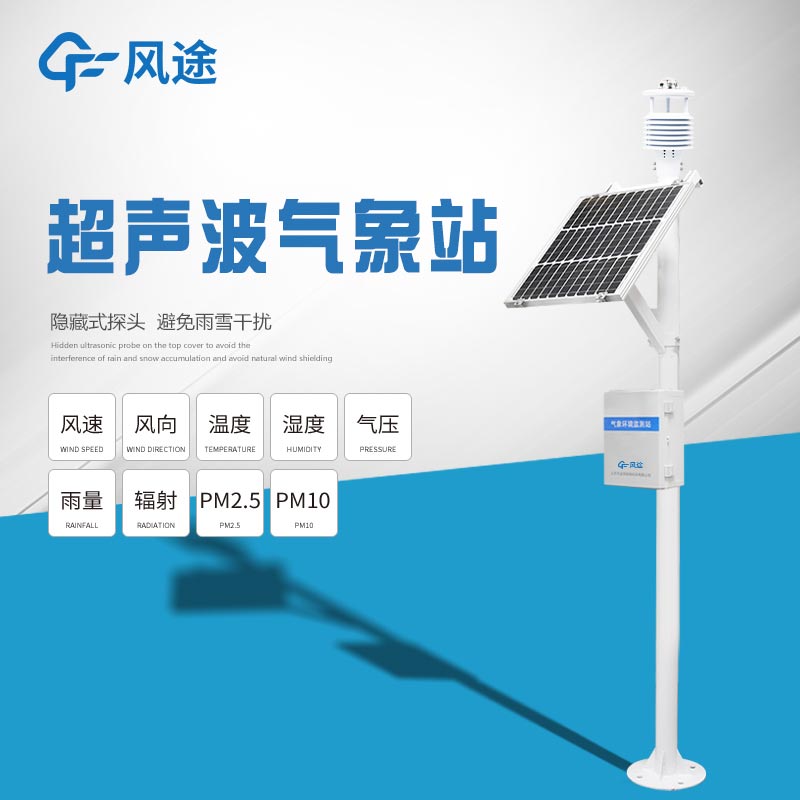
FT - B4BS Agriculture Sensors are capable of comprehensively monitoring four key environmental parameters: air temperature, air humidity, carbon dioxide concentration, and light intensity. For growing crops, temperature and humidity affect the transpiration and water absorption of crops, carbon diox...
The integrated weather monitoring system, also known as weather station, provides timely warning of possible weather disasters by collecting, processing and analyzing weather elements in real time. It is mainly used in the field of agricultural production, emergency management of cities and industri...
The five elements micro meteorological instrument is a practical meteorological observation tool, which has the ability to simultaneously monitor the five core meteorological parameters: wind speed, wind direction, temperature, humidity and atmospheric pressure. The device provides real-time informa...
Small and medium-sized river hydrological monitoring system is an automated device that can measure water level, flow, rainfall and other data in real time. Its a tool for the water conservancy industry. It provides remote monitoring function, and no manual intervention is required, which greatly av...


 Skype
Skype
 whatsapp
 mail
mail