Shandong Fengtu IOT Technology Co., Ltd
Sales Manager:Ms. Emily Wang
Cel,Whatsapp,Wechat:+86 15898932201
Email:info@fengtutec.com
Add:No. 155 Optoelectronic Industry Accelerator, Gaoxin District, Weifang, Shandong, China


Sales Manager:Ms. Emily Wang
Cel,Whatsapp,Wechat:+86 15898932201
Email:info@fengtutec.com
Add:No. 155 Optoelectronic Industry Accelerator, Gaoxin District, Weifang, Shandong, China
time:2025-12-12 09:38:58 source:Weather Station viewed:620 time
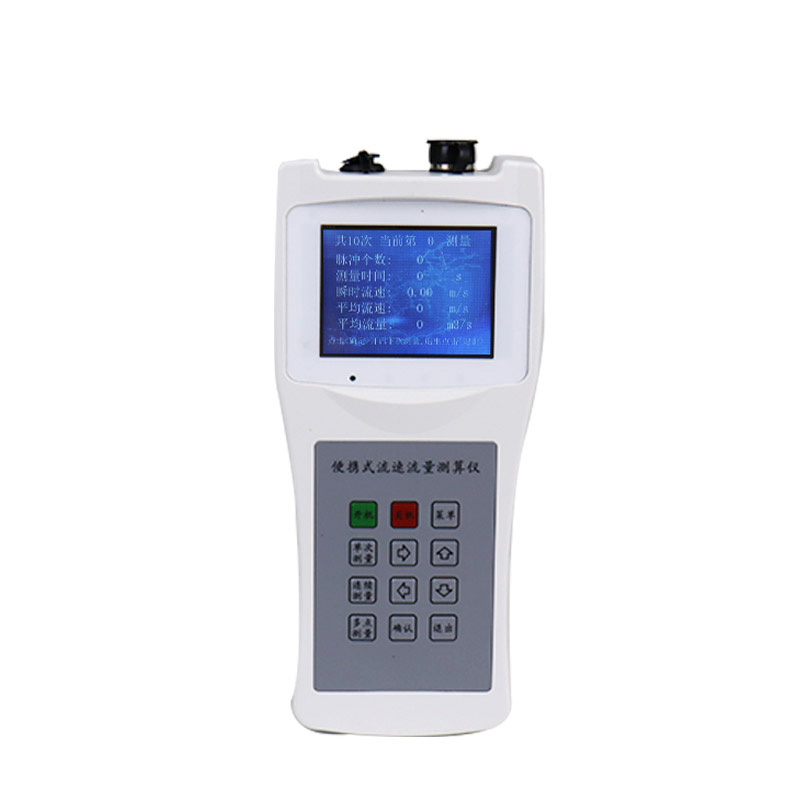
Portable surface flow meter is a portable device designed for field open channel flow velocity and flow measurement by departments such as hydrological monitoring, agricultural irrigation, municipal drainage, and environmental protection. It calculates flow rate by directly measuring the surface velocity of water and is suitable for rapid on-site measurement in various scenarios, including natural rivers, channels, and pipeline outlets.
The core function of Portable surface flow meter is to measure the surface velocity of water flow. Its main working principle varies depending on the sensor type. The mechanical rotor current meter is the most classic type. When the water flow drives its blades or propeller to rotate, the rotational speed establishes a linear function relationship with the water flow velocity. The flow velocity is calculated by recording the number of revolutions per unit time. Another common type is the non-contact radar current meter, which uses the Doppler effect principle. It emits microwaves towards the water surface and receives the echoes, directly calculating the surface velocity through frequency changes. This avoids sensor contact with the water body and is particularly suitable for complex water conditions such as floods and sewage.
Based on the measurement principle and method, Portable surface flow meter is mainly divided into two categories: contact and non-contact. Contact flow meters, represented by mechanical rotor types, are simple in structure and low in cost. However, their measurement accuracy is affected by water cleanliness and the risk of rotor entanglement. Non-contact flow meters mainly include radar current meters and handheld ultrasonic current meters. Their advantages include no interference with the flow field during measurement, quick and safe operation, and suitability for disaster relief or polluted water measurements. However, they are more sensitive to surface fluctuations and floating debris.
In practical applications, the value of the Portable surface flow meter lies in its convenience and field applicability. Hydrologists can use it to perform multi-point measurements at river cross-sections and calculate instantaneous flow rates by combining cross-sectional area data. Environmental inspectors use it to quickly measure the flow velocity at enterprise drainage outlets to assist in verifying discharge flow rates. In agricultural irrigation management, it can be used to measure canal water flow velocity and assess irrigation efficiency. Its portability is particularly advantageous when conducting field hydrogeological surveys. Compared to large fixed flow meters, it is irreplaceable in single-point surveys, temporary measurements, and emergency monitoring.
When using the Portable surface flow meter, it is essential to follow operating procedures to ensure data accuracy. Before measurement, a typical cross-section with stable water flow and no eddies should be selected. When using a mechanical rotor type, ensure it is directly facing the water flow direction and that the rotor rotates freely. When using a radar type, maintain a suitable incident angle and measurement height. Regular instrument calibration or comparative testing is crucial. Furthermore, surface velocity must be converted to cross-sectional average velocity using an empirical coefficient before it can be used to calculate flow rate; this coefficient must be appropriately selected based on the river's hydraulic conditions.
Currently, Portable surface flow meter is developing towards higher integration and greater intelligence. Some new devices have integrated GPS positioning, Bluetooth data transmission, and dedicated app processing functions, enabling integrated measurement, recording, and calculation, directly outputting flow rate results. As a fundamental hydrological measurement tool, Portable surface flow meter continues to play a vital role in water resource management, environmental protection, and engineering practice due to its reliability, directness, and flexibility.
Wind is a phenomenon of air movement in the atmosphere, and its speed and direction are influenced by a variety of factors, including topography, climate, and seasons. A wind rose is a type of chart used to represent the distribution of wind direction and speed; it shows the frequency and intensity...
Automatic radar water level rainfall monitoring system has the advantages of simple structure and low cost, which is widely used in water conservancy projects. At present, the number of automatic radar water level rainfall stations is increasing and the degree of automation is improving, and there h...
The air quality micro-monitoring station is an environmental protection device that is primarily used to monitor the quality of indoor and outdoor air. It provides real-time data on environmental indicators by measuring air quality parameters in the environment, such as PM2.5, PM10 and CO2, to deriv...
Hello everyone, at present Windway Technology has been on the new tilt displacement monitor, also known as geohazard monitoring system, which is an online automatic remote geohazard monitoring and early warning system based on Internet of Things technology, recognizing the model FT-DH1, FT-DH2.In th...


 Skype
Skype
 whatsapp
 mail
mail