Shandong Fengtu IOT Technology Co., Ltd
Sales Manager:Ms. Emily Wang
Cel,Whatsapp,Wechat:+86 15898932201
Email:info@fengtutec.com
Add:No. 155 Optoelectronic Industry Accelerator, Gaoxin District, Weifang, Shandong, China


Sales Manager:Ms. Emily Wang
Cel,Whatsapp,Wechat:+86 15898932201
Email:info@fengtutec.com
Add:No. 155 Optoelectronic Industry Accelerator, Gaoxin District, Weifang, Shandong, China
time:2026-09-10 09:37:09 source:Weather Station viewed:34 time
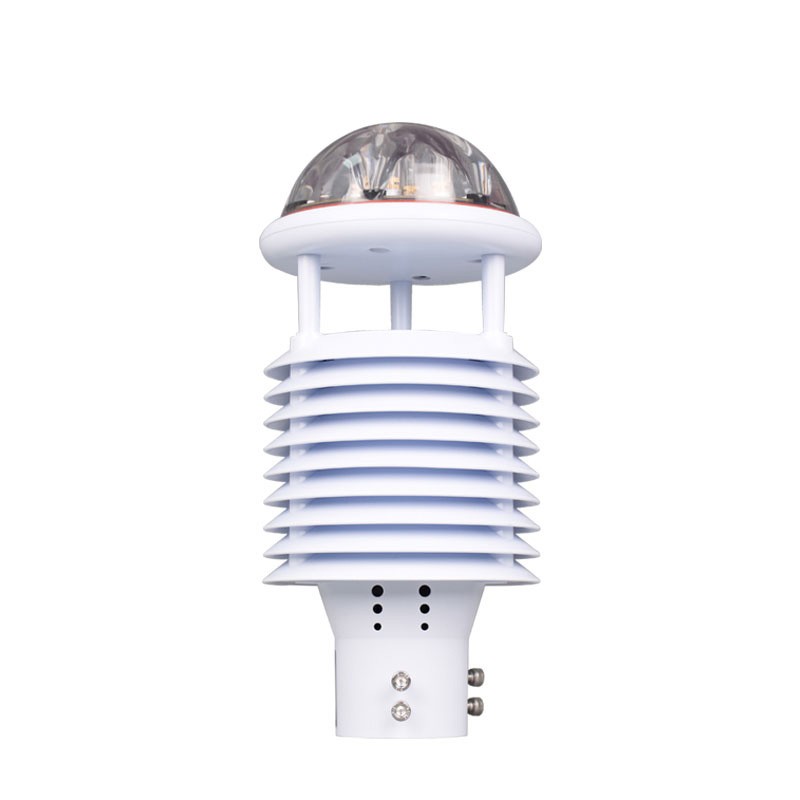
The multifunctional environmental weather station is a highly integrated, all-weather monitoring device capable of tracking twelve air pollutants and meteorological parameters. Equipped with stable sensing and protective technologies, it is suitable for various outdoor environments and supports parameter expansion, providing accurate, continuous data to support environmental monitoring and governance decision-making.
As ecological and environmental regulations tighten, the demand across industries for routine air quality and meteorological monitoring continues to rise. With its high integration, precision, and stability, the multifunctional environmental weather station has become a core device for environmental monitoring in diverse settings, effectively overcoming the limitations of traditional equipment—such as limited parameter coverage, insufficient stability, and cumbersome maintenance.
This station simultaneously monitors twelve core parameters: six atmospheric pollutant indicators (PM2.5, PM10, CO, SO2, NO2, O3) and six meteorological parameters (air temperature and humidity, wind speed and direction, atmospheric pressure, and optical rainfall), comprehensively meeting standard environmental monitoring needs. It supports optional expansion modules for parameters such as hydrogen sulfide, volatile organic compounds (VOCs), solar radiation, and noise; these can be flexibly configured to suit specific monitoring scenarios, demonstrating exceptional adaptability. The device performs continuous 24-hour online monitoring, and the precise data collected serves as a reliable basis for air quality assessment and environmental governance decisions.
Featuring a specialized structural and technical design, the station houses its core monitoring components—including ultrasonic probes—beneath a protective top cover. This design effectively prevents measurement errors caused by the accumulation of rain or snow or the obstruction of natural airflow. Wind speed and direction are measured using continuous frequency-modulated ultrasonic signals and relative phase measurement principles; combined with advanced sensing technology, this enables real-time measurement without a starting wind speed threshold, resulting in highly sensitive and accurate data acquisition. Hardware features include a watchdog circuit and automatic reset function, significantly enhancing anti-interference capabilities and ensuring long-term, stable system operation.
Furthermore, the station boasts high integration, no moving parts, and zero operational wear. It requires no frequent on-site calibration, thereby drastically reducing long-term operation and maintenance costs. The housing is constructed from ASA engineering plastic, which resists discoloration and aging during prolonged outdoor use, making it suitable for a wide range of complex outdoor operating conditions. This device is suitable for a wide range of applications requiring air quality monitoring—such as urban grid-based monitoring, smart street lighting, scenic areas, construction sites, industrial and mining facilities, urban roads, and highways—serving as a key foundational component in the development of smart environmental protection systems.
Doppler Ultrasonic Flow Meter instrument consists of modules for flow velocity, liquid level, and temperature measurement, as well as a microcontroller, communication, and power supply modules. It integrates multi-parameter measurement, storage, and communication, and is suitable for flow velo...
The integrated rainfall and water level monitoring station employs K-band planar radar technology to simultaneously measure water level and rainfall in a non-contact manner. Unaffected by temperature, sediment, pollutants, or floating debris, it is suitable for scenarios such as rivers, irriga...
The Shandong Fengtu piezoelectric rainfall sensor utilizes a PVDF piezoelectric film as its sensing element. It incorporates an embedded AI neural network to identify raindrop signals, effectively reducing false triggers caused by debris (such as gravel or dust) or vibrations. The sensor provides st...
With the acceleration of urbanization, smart city has become an important development direction for future city construction. Smart light poles as an important part of the smart city, its environmental sensors in the realization of intelligent lighting at the same time, but also for the city's e...


 Skype
Skype
 whatsapp
 mail
mail