Shandong Fengtu IOT Technology Co., Ltd
Sales Manager:Ms. Emily Wang
Cel,Whatsapp,Wechat:+86 15898932201
Email:info@fengtutec.com
Add:No. 155 Optoelectronic Industry Accelerator, Gaoxin District, Weifang, Shandong, China


Sales Manager:Ms. Emily Wang
Cel,Whatsapp,Wechat:+86 15898932201
Email:info@fengtutec.com
Add:No. 155 Optoelectronic Industry Accelerator, Gaoxin District, Weifang, Shandong, China
time:2026-09-17 09:00:35 source:Weather Station viewed:2 time
Tailings dam displacement monitoring stations utilize differential RTK technology to achieve millimeter-level precision monitoring. Designed for diverse and complex outdoor conditions, they feature low power consumption, multiple communication modes, and autonomous early-warning capabilities. Compatible with various monitoring platforms, they are widely used for safety monitoring in projects such as tailings dams, large dams, and bridges.
These displacement monitoring stations are high-precision, intelligent devices for engineering safety monitoring. Powered by core differential RTK technology, they detect minute displacements at the millimeter level and capture subtle deformation data with high accuracy. By identifying risks stemming from geological deformation or structural instability at the source, they serve as critical equipment for safety management in tailings dams and infrastructure projects. Surpassing the precision limitations of traditional equipment, they achieve horizontal monitoring accuracy of ±(2.5mm + 1ppm) and vertical accuracy of ±(5mm + 1ppm). Equipped with choke-ring antennas and magnetic wave-absorbing materials, they effectively mitigate multipath interference, ensuring data stability in complex environments.
Highly adaptable, these stations are suitable for a wide range of engineering applications, including tailings dam monitoring, dam safety inspections, bridge health assessments, and landslide early warning systems. They operate reliably across a broad temperature range (-40°C to +85°C) and in high-humidity conditions without condensation, making them ideal for harsh outdoor environments with obstructions. Featuring a compact, integrated design, the stations allow for simple installation and rapid deployment without complex construction, significantly reducing project setup costs and labor requirements. They utilize a solar-plus-battery power system; a 30W solar panel paired with a 20Ah battery ensures long-lasting operation, meeting the need for continuous, all-weather monitoring in remote locations lacking grid power. The system offers controlled overall power consumption and low daily operating energy use.
The stations possess robust data transmission and processing capabilities, supporting multiple communication methods—such as 4G, wireless bridges, Wi-Fi, and Ethernet—and protocols like TCP, HTTP, and UDP for direct data transfer, enabling seamless integration with clients' proprietary monitoring platforms. The device utilizes the standard Modbus-RTU communication protocol and supports autonomous, offline processing of displacement data; it performs displacement and angle calculations as well as threshold-exceedance alarms without relying on a cloud platform, ensuring effective monitoring even during network outages. Additionally, the device features an RS485 interface for connecting various external environmental sensors. With standardized data output and high compatibility, it integrates seamlessly into diverse engineering monitoring systems to enable data sharing and fusion. This provides precise, continuous, and comprehensive data support for safety analysis, risk prediction, and hazard source tracing, thereby comprehensively enhancing the intelligence and efficiency of engineering safety monitoring.
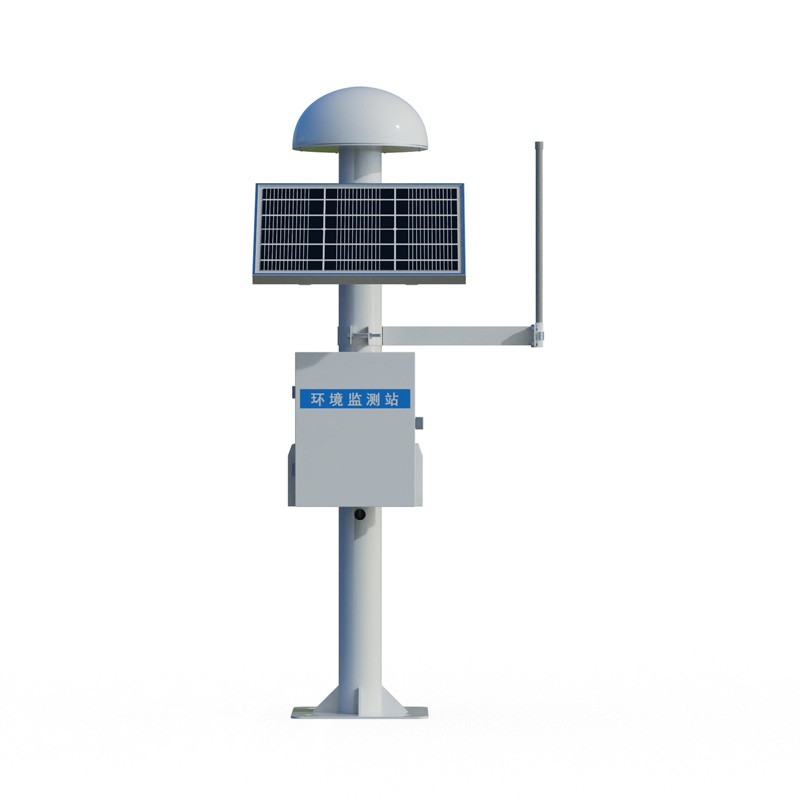
Civil-level meteorological monitoring equipment typically focuses on portability, ease of use, and cost-effectiveness. Here are some common types of civil meteorological monitoring equipment:Personal Weather Stations: These integrate multiple sensors and can measure temperature, humidity, wind...
Integrated rainfall monitoring station is an important part of rainfall monitoring, which can realize the observation and analysis of real-time rainfall situation in different stations in the region. Traditional integrated rainfall monitoring data has problems such as data collection and storage dif...
Automated agricultural weather stations are playing an increasingly important role in agricultural weather disaster prevention and mitigation. Because the appropriate climatic conditions required for different crops to grow in different environmental conditions vary significantly, an automatic weath...
Wave measuring instrument for wave-making pool is a specialized device for accurately measuring free-flow wave parameters and water level height. It is suitable for long-term reliable monitoring in marine, port, reservoir, and lake environments, providing crucial data support for hydrological research, engineering testing, and safety early warning....


 Skype
Skype
 whatsapp
 mail
mail