Shandong Fengtu IOT Technology Co., Ltd
Sales Manager:Ms. Emily Wang
Cel,Whatsapp,Wechat:+86 15898932201
Email:info@fengtutec.com
Add:No. 155 Optoelectronic Industry Accelerator, Gaoxin District, Weifang, Shandong, China


Sales Manager:Ms. Emily Wang
Cel,Whatsapp,Wechat:+86 15898932201
Email:info@fengtutec.com
Add:No. 155 Optoelectronic Industry Accelerator, Gaoxin District, Weifang, Shandong, China
time:2026-09-21 09:15:51 source:Weather Station viewed:2 time
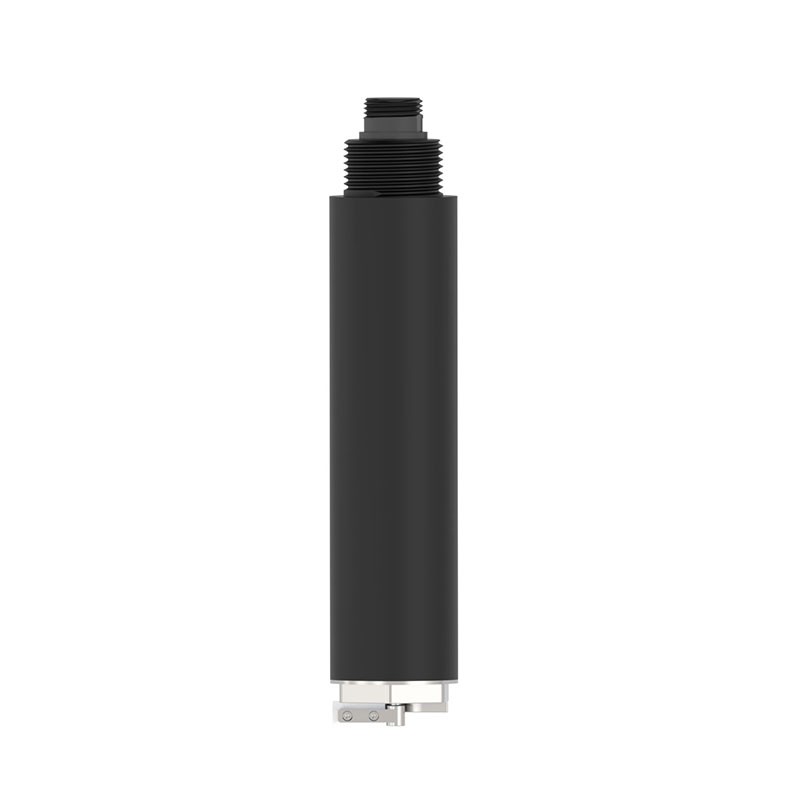
Self-cleaning Turbidity Sensor Utilizing the 90° scattered light method to detect particle concentration in water, this device optimizes data accuracy through temperature compensation algorithms and features a built-in automatic cleaning mechanism. It supports customizable measurement ranges and delivers stable data output, making it suitable for a wide variety of online water quality monitoring applications.
Self-cleaning Turbidity Sensor This is a high-precision detection device widely used in the field of water quality monitoring. It is primarily designed to measure the concentration of particulate impurities in various liquids and is suitable for municipal water supply, sewage treatment, industrial water monitoring, and other scenarios. Moving away from traditional manual maintenance methods, the device integrates optical detection with an automatic cleaning system. This effectively resolves common industry issues—such as probe fouling, bubble interference, and data deviation during long-term monitoring—ensuring continuous and stable water quality testing.
Self-cleaning Turbidity Sensor At its core, the device employs the 90° scattered light detection principle. A built-in light source emits light into the water, and the intensity of scattered light is precisely captured at specific angles. Internal programming processes the collected data linearly, while an automatic temperature compensation algorithm offsets the impact of ambient temperature fluctuations, thereby enhancing data accuracy. The standard measurement range is 0 to 1000 NTU, with customizable options for 0–40 NTU and 0–3000 NTU. It offers a resolution of 0.1 NTU and maintains detection accuracy within standard limits, meeting the requirements for precise monitoring across diverse water quality conditions.
Self-cleaning Turbidity Sensor Designed for complex operating environments, the device features an immersion-style mounting structure with standard 3/4 NPT threading for easy installation. It comes with a standard 5-meter cable, making it compatible with most on-site monitoring scenarios. It operates on a wide DC voltage range (12V–24V) with controlled power consumption; the cleaning brush maintains stable power usage across standby and active states, ensuring energy efficiency. The product supports an operating temperature range of 0°C to 50°C and a storage range of -5°C to 65°C, with a pressure tolerance of ≤0.2 MPa. With an IP68 protection rating and a composite housing made of ABS and metal, it offers excellent waterproofing and corrosion resistance, ensuring reliable long-term performance in harsh outdoor and industrial water environments. For data transmission and calibration, Self-cleaning Turbidity Sensor utilizes an RS-485 interface and supports the standard Modbus/RTU protocol, ensuring stable transmission, high compatibility, and seamless integration with various water quality monitoring systems. The device employs a two-point calibration method, making operation and maintenance straightforward. Its built-in automatic cleaning mechanism periodically removes deposits from the probe, significantly reducing the need for manual maintenance and enabling continuous, precise 24-hour online turbidity monitoring—thereby providing reliable data to support water quality control and remediation efforts.
The season of frequent rainfall is accompanied by a corresponding increase in the risk of urban and rural flooding, flash floods, geological disasters and river flooding. During the rainy season, it is critical to accurately monitor rainfall, safeguard infrastructure, rationally plan agricultural ir...
Most agricultural workers believe that the wind direction, wind speed and other factors do not have much impact on crop growth, but can not be ignored on the harm caused by crop plants, crop collapse is often encountered in modern agricultural production, we use ultrasonic wind speed and wind direct...
With the rapid improvement of China's industrial level, the proportion of petroleum and by-products in industrial production is increasing, and the construction of reserve oil depots in China is becoming more and more intensive, putting forward higher requirements for the performance of oil tank...
Piezoelectric rain sensors use the impact measurement principle to measure the weight of individual raindrops and thus calculate the amount of rainfall. The raindrops are influenced by the weight of the raindrops and air resistance during their fall. When they reach the ground, the velocity is const...


 Skype
Skype
 whatsapp
 mail
mail