Shandong Fengtu IOT Technology Co., Ltd
Sales Manager:Ms. Emily Wang
Cel,Whatsapp,Wechat:+86 15898932201
Email:info@fengtutec.com
Add:No. 155 Optoelectronic Industry Accelerator, Gaoxin District, Weifang, Shandong, China


Sales Manager:Ms. Emily Wang
Cel,Whatsapp,Wechat:+86 15898932201
Email:info@fengtutec.com
Add:No. 155 Optoelectronic Industry Accelerator, Gaoxin District, Weifang, Shandong, China
time:2023-06-06 17:32:32 source:Weather Station viewed:925 time
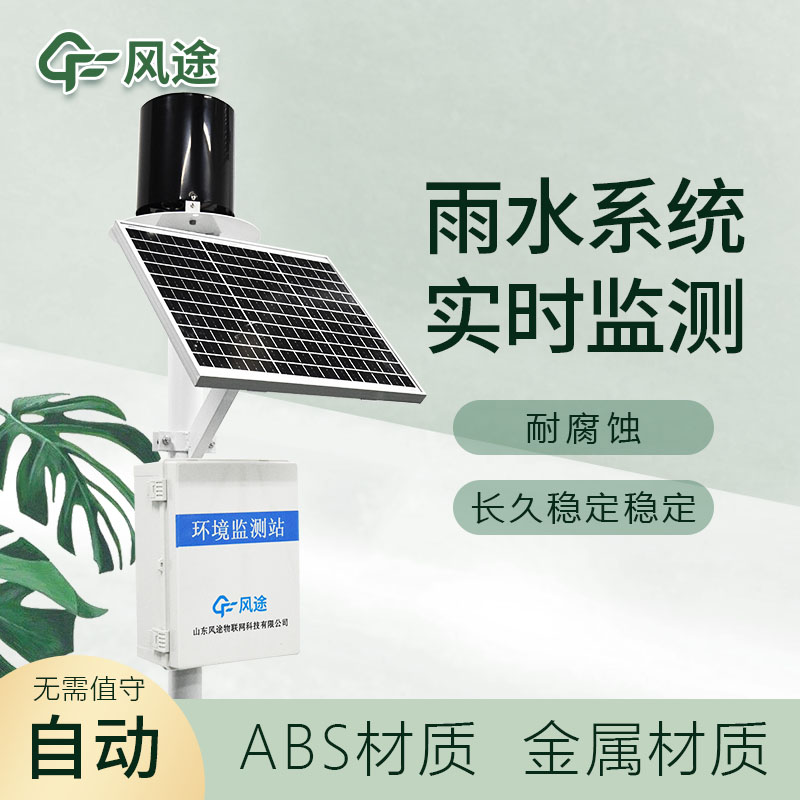
With the intensification of global climate change, climate anomalies are frequent, and extreme weather events such as heavy rainfall and flooding occur from time to time, posing great challenges to the construction and development of cities and villages. Under such circumstances, the protection of the environment and ecological construction has become a top priority. And rainwater monitoring stations, as important equipment for safeguarding the water environment, are playing an important role.
A rainwater monitoring station is a device used to measure rainwater intensity, rainfall, temperature, humidity and other meteorological data. Its data collection system is capable of recording every rainfall data with high accuracy, which can help urban and rural areas to plan and manage the use of water resources and mitigate the damage caused by rainwater to urban traffic, infrastructure and agricultural production.
As a key piece of water environment monitoring equipment, rainwater monitoring stations have several advantages:
1. High precision measurement: rainwater monitoring stations are able to measure various meteorological parameters, including rainfall, precipitation intensity, temperature and humidity, in real time and accurately through high precision sensors, ensuring the accuracy and reliability of the data.
2. Data sharing: rainwater monitoring station data can be shared through the cloud platform to achieve region-wide real-time monitoring and data analysis, helping various departments and agencies to make quick responses and decisions.
3. Multi-functional applications: rainwater monitoring stations are not only able to monitor rainwater data, but can also be equipped with other weather monitoring equipment to achieve diversified weather data monitoring.
4. Reduce losses: rainwater monitoring stations can help people to understand weather changes in advance, predict the amount and intensity of rainfall, and then take timely measures to reduce the losses caused by heavy rainfall.
In short, the advantages of rainwater monitoring stations are not only to improve the accuracy and reliability of data monitoring, but more importantly to help urban and rural areas to respond quickly to extreme weather events, reduce losses and protect people's lives and property. In the future, rainwater monitoring stations will play an increasingly important role in ecological construction and environmental protection.
The measurement principle of Radar water level sensor is clear and easy to understand. The radar water level sensing antenna emits radar pulses, and the antenna receives the pulses reflected back from the water surface and records the time. Since the propagation speed of electromagnetic waves...
Fengtu specializes in the research, development, and production of environmental online monitoring equipment. Its FT-WQX2 Ultrasonic Wind Speed Direction Sensor has been recognized by the market in the field of meteorological monitoring.This device is capable of continuously monitoring outdoor meteo...
Smart street light monitoring sensor is a dedicated meteorological and environmental monitoring device for smart streetlights, representing a new generation of infrastructure for smart city construction. It is used to monitor air quality and environmental pollution levels, detecting parameters such as air temperature, humidity, light intensity, PM2.5, PM10, and noise, and displaying real-time environmental data....
Integrated rainfall monitoring station is an important part of rainfall monitoring, which can realize the observation and analysis of real-time rainfall situation in different stations in the region. Traditional integrated rainfall monitoring data has problems such as data collection and storage dif...


 Skype
 whatsapp
 mail