Shandong Fengtu IOT Technology Co., Ltd
Sales Manager:Ms. Emily Wang
Cel,Whatsapp,Wechat:+86 15898932201
Email:info@fengtutec.com
Add:No. 155 Optoelectronic Industry Accelerator, Gaoxin District, Weifang, Shandong, China


Sales Manager:Ms. Emily Wang
Cel,Whatsapp,Wechat:+86 15898932201
Email:info@fengtutec.com
Add:No. 155 Optoelectronic Industry Accelerator, Gaoxin District, Weifang, Shandong, China
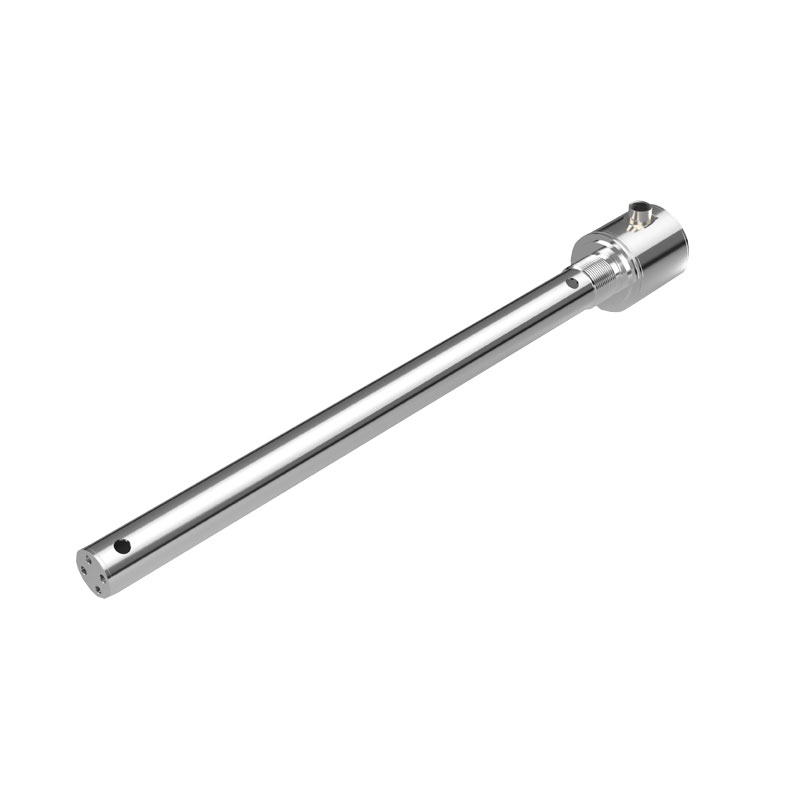
Model:QL-X
Brand:fengtu
1、Oil Level Sensor Product Introduction
Oil Level Sensor is used to monitor changes in the oil level in the tank and the health of the lubricating oil in real time and online, which can optimize the oil change cycle.Oil Level Sensor is used for real-time, online monitoring of oil tank level changes and lubricant health. Continuous monitoring of the oil condition improves condition-based maintenance efficiency, optimizes oil change intervals, and reduces reliance on offline analysis.
Oil Level Sensor employs unique level detection technology and electrochemical impedance spectroscopy (EIS) to detect the oil's impedance spectrum, thereby obtaining the oil's health status. Impedance spectroscopy can detect multiple parameters and can be used to assess the wear and tear of lubricant additives, monitor oil aging, and determine oil contamination levels.
Oil Level Sensor helps users improve equipment asset health management, assisting in maintenance decisions based on real-time monitoring results and preventing abnormal wear and corrosion caused by oil leaks, oil aging, or contamination.
2、Oil Level Sensor Features
Wide range of applications, suitable for all lubricating oils
Simultaneous measurement of multiple frequencies and parameters promptly detects changes in oil levels, as well as oil contamination and aging, helping users optimize oil change intervals.
Big data oil analysis algorithms help customers solve diagnostic challenges.
24/7 uninterrupted monitoring provides timely feedback on oil quality and tank level status.
Strong compatibility, compatible with CAN-J1939 and RS485-Modbus RTU, 4-20mA output.
No moving parts, robust and durable.
Compact and lightweight, easy to install.
3、Oil Level Sensor Application areas
Lubricating oil is the "blood" of critical equipment. Oil leaks and oil failure directly lead to abnormal wear of mechanical structures and critical functional components, a major cause of large equipment failures and serious accidents.
Oil Level Sensor can continuously monitor the oil tank level and the degree of oil aging and contamination 24 hours a day, providing real-time feedback on the oil's operating status. This helps users avoid or mitigate equipment failures caused by lubricating oil failure.
Oil Level Sensor can be widely used in industries such as power, mining, cement, shipbuilding, military, industrial manufacturing, papermaking, petrochemicals, transportation, metallurgy, aviation, oil fields, and ports. Applications include: wind turbine gearboxes, aircraft/helicopter gearboxes, hydraulic transmission systems, machining centers, steam turbines, gearboxes, electric vehicle motor cooling equipment, and gasoline/diesel engines.
4、Oil Level Sensor Technical parameters
Monitoring Parameters:
Liquid Level: 300, 500, 700, 1000, 1500, 2000 mm (range customizable)
Liquid Level Accuracy: ±0.5% F.S.
Dielectric Constant
Dielectric Constant: 1~10;
Dielectric Constant Accuracy: ±0.01 (absolute accuracy)
Water Activity (Optional)
Measurement Range: 0…1aw
Measurement Accuracy: 0…0.6±0.02aw
0.6…0.9±0.03aw
0.9…1±0.04aw
Response Time (Typical): <1 minute
Dissolved Water Content (Optional)
Measurement Range: 0…10000ppm, 0~1% (suitable for mineral transformer oil)
Measurement Accuracy: ±10% Free Water Content (Optional)
Measuring Range (Absolute Accuracy): 0~5% (±0.1%), 5%~Phase Reversal Point (±2%), 0~100%
Temperature Stability: 0.01% water/℃
Resolution: 100ppm
Temperature
Measuring Range: −40...120°C
Accuracy (at+25°C): ±0.2°C
Mechanical Interface: Flange Mounting
Protection Rating: IP68
Flow Rate: Independent of Flow Rate
Viscosity: Independent of Viscosity
Ambient Temperature: -40℃~85℃
Oil Temperature: -40℃~120℃
Operating Pressure: 10Mpa (Max)
Communication Protocol: CAN-J1939/RS485-Modbus RTU; 4-20mA
Weight: 200g
Power Supply: 10~30VDC, 0.4W
Soil Moisture Monitoring System is a GIS-based information management system, which is capable of real-time dynamic monitoring and management in the whole region. It is a soil moisture monitoring instrument suitable for use in agricultural production, scientific research and land resource management...
Nowadays, most city dwellers are not only concerned about daily weather changes, but also begin to pay attention to air quality. With the country's continued focus on environmental issues, environmental governance has become a priority for national and local governments. Large air quality monito...
Today, we are counting down the environmental sensors that can be used in the high-speed railroad and highway network....
As industries such as transport, aviation and navigation continue to develop, weather phenomena such as atmospheric pollution and haze have become important factors in limiting the development of these industries. In this context, there is increasing interest in the use of visibility monitoring inst...


 Get a Free Quote
 Skype
Skype
 whatsapp
 mail
mail