Shandong Fengtu IOT Technology Co., Ltd
Sales Manager:Ms. Emily Wang
Cel,Whatsapp,Wechat:+86 15898932201
Email:info@fengtutec.com
Add:No. 155 Optoelectronic Industry Accelerator, Gaoxin District, Weifang, Shandong, China


Sales Manager:Ms. Emily Wang
Cel,Whatsapp,Wechat:+86 15898932201
Email:info@fengtutec.com
Add:No. 155 Optoelectronic Industry Accelerator, Gaoxin District, Weifang, Shandong, China
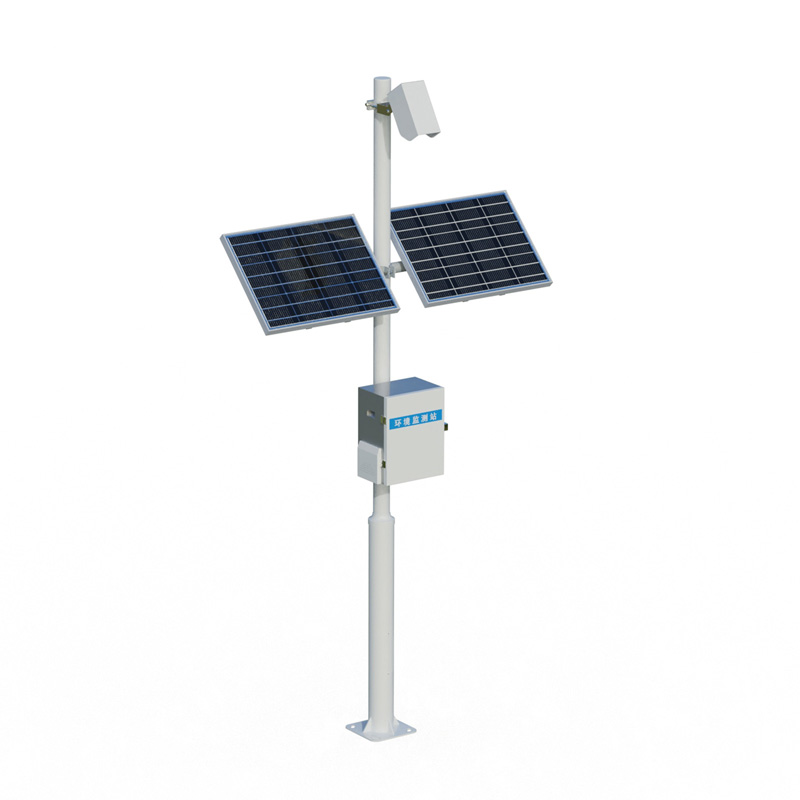
Model:FT-LMZK1
Brand:fengtu
1.Road Surface Monitoring Product Introduction
Road Surface Monitoring is an automatic road monitoring device designed and developed to enhance road safety and traffic management during adverse weather changes.Road Surface Monitoring uses remote sensing technology to avoid damage to roads and thus avoid traffic interference caused by the installation of road weather stations.
Under road conditions where embedded pavement sensors are inconvenient or cannot be installed, remote sensing installation means that there is no need to close the road or cut the pavement, and the installation work is both safe and convenient.Low maintenance is an ideal choice for the composition of road meteorological systems.
It can be installed on existing weather stations or on other buildings with unobstructed views of the road surface.
Multi-spectral measurement technology enables accurate detection of the thickness of icy, snow and water on the surface of the road.
By providing road surface condition information, road management departments provide accurate monitoring data and take response measures before road safety risks occur.
2.Road Surface Monitoring system composition: road condition sensor, collector, pole bracket, power supply system, cloud platform
3.Road Surface Monitoring product application
1.Install the bridge surface from a long distance
2.Areas with frequent accidents
3.Areas with large traffic flow
3.Areas with frequent rain and snow
4.Road Surface Monitoring product features
1.Long-distance measurement of road area water, ice and snow
2.Measure the road surface status
3.Measure the degree of water accumulation, ice surface, and slipperyness
4.Non-buried design
5.Resistant to rust
6.Infrared detection up to 15 meters
7.No need to close the lane, easy installation and maintenance
8.Rustrated design, all-weather measurement
5.Road Surface Monitoring Technical Parameters
| Detection distance and detection area diameter | 2-8 meters; 23cm |
| Installation angle for horizontal lines | 30-80 degrees |
| Power and power consumption | DC12-24V; 0.6W |
| Operating temperature and humidity | Temperature: -40ºC to +60ºC; Humidity: 0 to 95% |
| Thickness of water accumulation | 0-10mm |
| Ice thickness | 0-2mm |
| Snow thickness | 0-2mm |
| Slippery degree | 0.01 (slippery) - 0.82 (strong friction) |
| Pavement status report | Mixed dry, damp, wet, snow, ice, ice water |
| Road weather phenomenon (optional) | Pavement temperature: -40ºC to +60ºC |
| Weather phenomena: rain; snow; heavy fog | |
| Pavement materials | Concrete and asphalt pavement |
| communication | RS485, RS232 |
These sensors calculate cyanobacteria concentration using the fluorescence excitation characteristics of phycocyanin, employing RS485 signal output and incorporating multiple anti-interference technologies. They are easy to install, have an IP68 protection rating, and are suitable for long-ter...
FT - B4BS Agriculture Sensors are capable of comprehensively monitoring four key environmental parameters: air temperature, air humidity, carbon dioxide concentration, and light intensity. For growing crops, temperature and humidity affect the transpiration and water absorption of crops, carbon diox...
Today, let's introduce the Dust Monitoring System (β-ray) launched by Fengtu.This system uses the principle of β-ray absorption method to monitor dust concentration and solve the problem of accurate monitoring of dust on construction sites. It has a dynamic heating system to eliminate the infl...
The FT - GSZ04 Water Supply Quality Station is a Water Quality Monitoring Station Secondary Water that integrates Internet of Things technology, combining functions such as sensor data collection, data display, and analysis. The system consists of multiple units including steady - flow exhaust, anal...


 Get a Free Quote
 Skype
Skype
 whatsapp
 mail
mail