Shandong Fengtu IOT Technology Co., Ltd
Sales Manager:Ms. Emily Wang
Cel,Whatsapp,Wechat:+86 15898932201
Email:info@fengtutec.com
Add:No. 155 Optoelectronic Industry Accelerator, Gaoxin District, Weifang, Shandong, China


Sales Manager:Ms. Emily Wang
Cel,Whatsapp,Wechat:+86 15898932201
Email:info@fengtutec.com
Add:No. 155 Optoelectronic Industry Accelerator, Gaoxin District, Weifang, Shandong, China
time:2025-01-23 16:30:12 source:Weather Station viewed:770 time
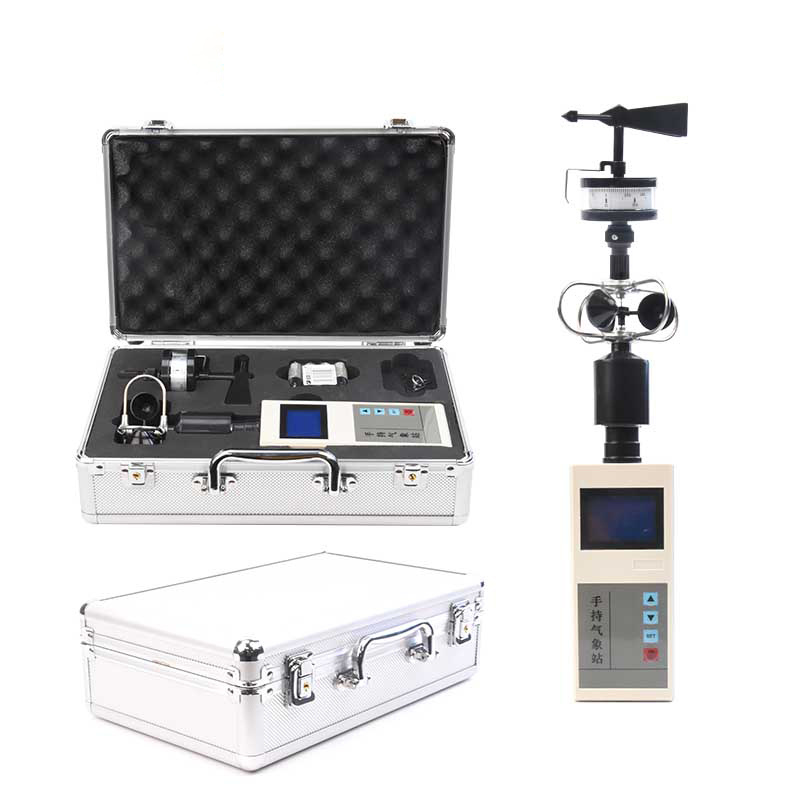
1.How to use the anemometer product introduction
how to use the anemometer After holding the anemometer in the air and selecting the measurement options, you can calculate the wind speed.how to use the anemometer is a portable meteorological observation instrument that is easy to carry, simple to operate, and integrates multiple meteorological elements.The system uses precision sensors and smart chips to accurately measure two meteorological elements, wind direction and wind speed, at the same time.The built-in large-capacity FLASH memory chip can store at least one year of meteorological data; the universal USB communication interface can be connected to a U disk to export data, which facilitates users to further process and analyze meteorological data.
how to use the anemometer can be widely used in meteorology, environmental protection, airports, agriculture and forestry, hydrology, military, warehousing, scientific research and other fields.
2.Functional features of how to use the anemometer
2.1-inch screen LCD displays temperature and wind speed;
Special wind direction dial (16 directions) and pointer are used to indicate real-time wind direction;
Large-capacity data storage, which can store up to 40,000 meteorological data (the data recording interval can be set between 1 and 60 minutes);
Universal USB communication interface, convenient for USB data downloading;
Only three AA dry batteries are needed for power supply; low power consumption design, long-term standby;
The structural design is scientific and reasonable, and it is easy to carry.
3.How to use the anemometer technical parameters
| Meteorological parameters | Measurement elements | Measuring range | Accuracy | resolution | unit |
| wind speed | 0~30 | ±0.3 | 0.01 | m/s | |
| wind direction | 16 directions | ±1 bearing | 1 direction | position | |
| power supply | AA dry cell battery (3 pieces) | ||||
| communication | USB | ||||
| storage | 40,000 pieces of data | ||||
| Host size | 160mm×70mm×28mm | ||||
| Overall machine size | 405mm×100mm×100mm | ||||
| weight | About 0.5Kg | ||||
| working environment | -20℃~80℃; 5%RH~95%RH | ||||
4.Precautions for how to use the anemometer
1.It is recommended to clear the data storage every time you need to record the time when you turn on the computer to prevent the large amount of data when exporting the currently required data, which will cause the time to be too long.
2.It is recommended to export the data content in the weather station promptly after use.
3.Please read this manual carefully before use and ensure that the sensor is inserted into the corresponding sensor interface and the battery direction is correct;
4.When the instrument shows that the battery power is low, please replace the battery in time to prevent battery leakage and damage to the instrument;
5.Prevent chemical reagents, oil, dust, etc.from directly damaging the sensor.Do not use it for a long time in condensation or extreme temperature environments.Do not subject it to cold or thermal shock;
6.The instrument is a precision device.Users should not disassemble it by themselves during use to avoid damaging the product;
7.Please keep the calibration certificate and certificate of conformity and return them with the product during maintenance.
BeiDou GNSS monitoring is a technical solution based on the BeiDou Navigation Satellite System, utilizing differential RTK technology to achieve millimeter-level precision displacement measurement. The system consists of a receiver, antenna, data transmission, power supply, and protective devi...
The GNSS monitoring station determines the three-dimensional spatial position (longitude, latitude and elevation) of the monitoring point based on the satellite signals of the Beidou Satellite Navigation System (BDS) and the Global Navigation Satellite System (GNSS). By receiving the signals transmi...
Fengtu Automatic Soil Monitoring System is dedicated to mitigating the effects of drought disasters by deploying soil moisture sensors and integrating web-based technologies to create a comprehensive decision-aid platform that integrates soil moisture data management, querying, and predictive analyt...
The key to measuring liquid level by radar level meter is to choose the right antenna. There are 3 types of commonly used non-contact radar level meter antennas: flared, parabolic and planar antennas. Horn antenna transmits spherical wave through point source, which is suitable for liquid level meas...


 Skype
Skype
 whatsapp
 mail
mail