Shandong Fengtu IOT Technology Co., Ltd
Sales Manager:Ms. Emily Wang
Cel,Whatsapp,Wechat:+86 15898932201
Email:info@fengtutec.com
Add:No. 155 Optoelectronic Industry Accelerator, Gaoxin District, Weifang, Shandong, China


Sales Manager:Ms. Emily Wang
Cel,Whatsapp,Wechat:+86 15898932201
Email:info@fengtutec.com
Add:No. 155 Optoelectronic Industry Accelerator, Gaoxin District, Weifang, Shandong, China
time:2026-03-23 10:57:55 source:Weather Station viewed:373 time
Utilizing LoRa wireless transparent transmission technology, the 400-Meter LoRa Transparent Transmission Anemometer for Drones drone-mounted anemometer/wind vane offers an effective coverage radius of up to 400 meters. Through its transparent transmission modules, it achieves zero-latency data backhaul, providing real-time feedback on wind conditions. This makes it ideally suited for scenarios requiring wind speed and direction measurement via drone platforms.
400-Meter LoRa Transparent Transmission Anemometer for Drones is a specialized measurement device designed around LoRa wireless transparent transmission technology. It is engineered to be mounted on drone platforms to facilitate the real-time acquisition of high-altitude wind speed and direction data.
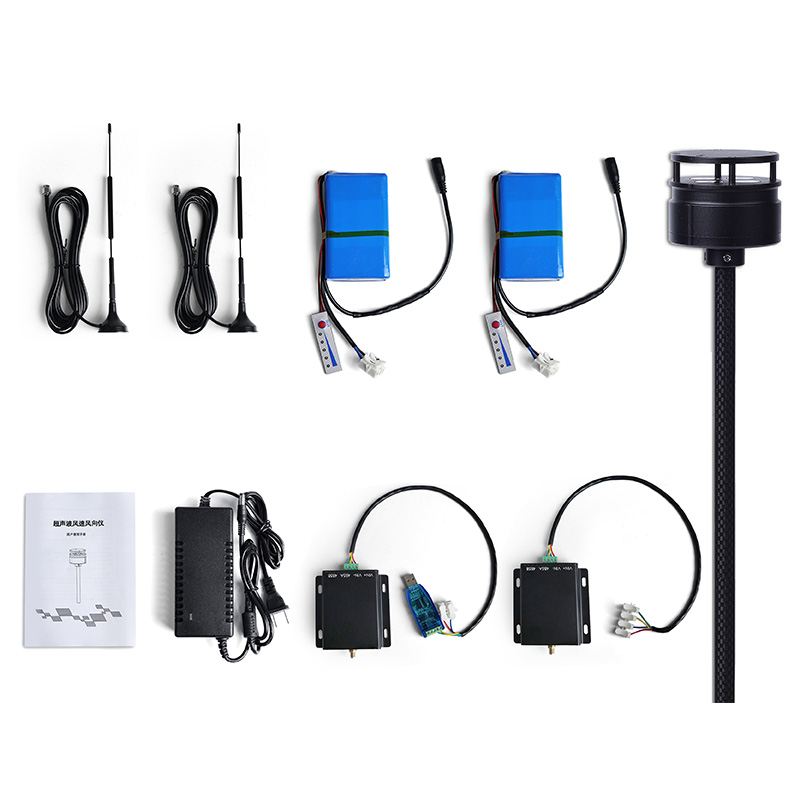
The technological core of 400-Meter LoRa Transparent Transmission Anemometer for Drones lies in its LoRa wireless transparent transmission modules. The system comprises two distinct units: one installed on the drone (airborne unit) and the other on the ground (ground unit), with each unit equipped with a dedicated antenna. The ground unit connects to a computer or data terminal via a USB-to-RS485 converter, while the airborne unit connects directly to the anemometer/wind vane sensor body. Upon system activation, the two units automatically establish a wireless link, transmitting the data collected by the anemometer directly to the ground using a transparent transmission protocol. Since no additional protocol conversion is required during this process, data transmission occurs with absolutely no latency.
In terms of transmission range, the system boasts an effective coverage radius of 400 meters. This range is achieved by leveraging the Low-Power Wide-Area (LPWA) characteristics inherent to LoRa modulation technology, ensuring a stable connection even in open-air environments. For drone flight operations, this 400-meter coverage area is sufficient to meet the requirements of most low-altitude measurement tasks—including agricultural plant protection, environmental monitoring, meteorological data collection, and power line inspection.
The product package consists of five main components: One drone-mounted anemometer/wind vane unit, used for measuring wind speed and direction values; two lithium-ion batteries (12.6V, 12,000mAh capacity, blue casing), which provide power to both the anemometer and the airborne LoRa module; one lithium-ion battery charger, used for routine charging and maintenance of the batteries; one USB-to-RS485 converter module, used to facilitate the data interface connection between the ground-side LoRa module and a computer; and two LoRa transparent transmission modules (each including an antenna), designated for use as the airborne unit and the ground unit, respectively.
In practical operation, the anemometer/wind vane is typically mounted either directly atop the drone's fuselage or on an extended bracket attached to the drone's arms. This strategic placement ensures that the measurement results remain unaffected by the turbulent airflow generated by the drone's rotors. The anemometer's internal wind speed sensor typically employs a three-cup or ultrasonic structure, while the wind direction sensor determines relative orientation through the combined operation of an electronic compass and a wind vane. The collected raw data is transmitted by an onboard LoRa module; upon reception by the ground-side module, the data is output via a USB-to-RS485 converter using a standard serial communication protocol. Users can then directly read parameters—such as real-time wind speed and direction, as well as instantaneous and average wind speeds—within the host computer software.
The transparent transmission capability of the 400-Meter LoRa Transparent Transmission Anemometer for Drones unit significantly reduces the complexity of system integration. By utilizing a transparent transmission mode, the data received at the ground station retains the exact same format as the raw output from the anemometer itself; consequently, users are not required to parse any additional communication protocols and can directly process the data using their existing data acquisition software. Furthermore, the operating frequency band of the LoRa transparent transmission module falls within the license-free spectrum, meaning that no specific frequency allocation applications are required during device deployment, thereby lowering the barrier to entry for its use.
The power supply system utilizes two high-capacity lithium batteries in an alternating configuration. Each individual battery boasts a capacity of 12,000 mAh, capable of sustaining the continuous operation of both the anemometer and the onboard LoRa module for several hours—sufficient to meet the demands of multiple flight missions. The distinctive blue casing of the batteries facilitates rapid identification, allowing users to quickly distinguish these dedicated power sources from other batteries within a collection. The accompanying charger is a purpose-built model, featuring output voltage and current specifications precisely matched to the battery requirements to ensure safe and secure charging.
In terms of data transmission reliability, LoRa technology demonstrates robust anti-interference capabilities and exceptional sensitivity for receiving weak signals. Even if obstructions intervene or the distance between the drone and the ground station increases during flight, the wireless link remains stable and connected, ensuring that data transmission is not interrupted by signal fluctuations. For dynamic data such as wind speed and direction—which demand real-time responsiveness—this stable transmission link ensures that ground operators can instantly access updates on wind conditions, enabling them to make timely adjustments to flight plans or critical safety assessments.
The 400-Meter LoRa Transparent Transmission Anemometer for Drones unit is ideally suited for professional applications requiring high-altitude wind field data. In the field of agricultural remote sensing, wind speed data is utilized to determine the optimal operational windows for crop spraying. In environmental monitoring, wind direction data aids in tracing the dispersion paths of airborne pollutants. In power line inspection operations, real-time wind condition information serves as a vital reference for ensuring the safety of drone flights. With a wireless coverage range of 400 meters combined with a zero-latency transparent transmission mechanism, this device establishes a comprehensive solution for wind field measurement and data transmission on small-to-medium-sized drone platforms.
Pore water pressure gauges are indispensable and important instruments in the field of geotechnical engineering, mainly used for accurately measuring the pore water pressure in soil or rock masses.Its working principle is based on the pressure - sensing mechanism. When the pore water in the soil or...
ambient weather station is used to monitor ambient weather and is able to transmit real-time data from your weather station to the Internet....
What kind of equipment is tailwater monitoring equipment? It is a class of hydrological monitoring system that collects, organizes and analyzes various information in a water body. It has several characteristics as follows.1. it can automatically complete the whole process from the collection of raw...
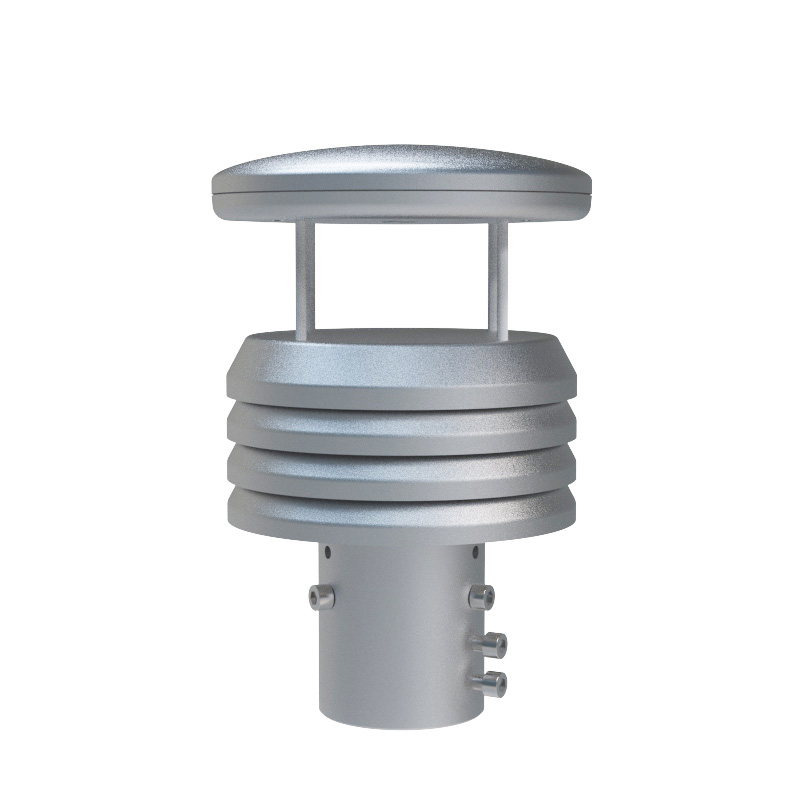
FT-WQX2 Ultrasonic Wind Speed Direction Sensor applies the principle of ultrasonic time difference method. By transmitting continuous frequency-modulated ultrasonic signals, it utilizes the characteristic that the propagation speed of ultrasonic waves in the air is affected by wind speed to measure...


 Skype
Skype
 whatsapp
 mail
mail