Shandong Fengtu IOT Technology Co., Ltd
Sales Manager:Ms. Emily Wang
Cel,Whatsapp,Wechat:+86 15898932201
Email:info@fengtutec.com
Add:No. 155 Optoelectronic Industry Accelerator, Gaoxin District, Weifang, Shandong, China


Sales Manager:Ms. Emily Wang
Cel,Whatsapp,Wechat:+86 15898932201
Email:info@fengtutec.com
Add:No. 155 Optoelectronic Industry Accelerator, Gaoxin District, Weifang, Shandong, China
time:2024-09-14 13:01:18 source:Weather Station viewed:895 time
Air quality is an indicator that measures the content of pollutants in the air of a region. It is directly related to people's health and the sustainability of the environment. The quality of air is usually evaluated by monitoring the concentration of pollutants in the air. These pollutants may include particulate matter, sulfur dioxide, nitrogen oxides, carbon monoxide, ozone, etc.
The sources of air pollution are diverse, and human factors are the main sources of pollution. For example, emissions from transportation means such as cars, ships, and airplanes are the main sources of urban air pollution. Waste gases released during industrial production processes, pollutants generated by burning fuels for household life and heating, and activities such as waste incineration also affect air quality.
In addition to human factors, natural conditions such as the development density of cities, topography and geomorphology, and meteorological conditions also affect air quality. For example, high-rise buildings in cities may hinder air circulation and lead to the accumulation of pollutants in local areas. The special topography of mountainous areas or coastal regions will also affect air flow and the diffusion of pollutants. In addition, meteorological conditions such as wind speed, wind direction, temperature, and humidity will also affect the spread and dilution of pollutants.
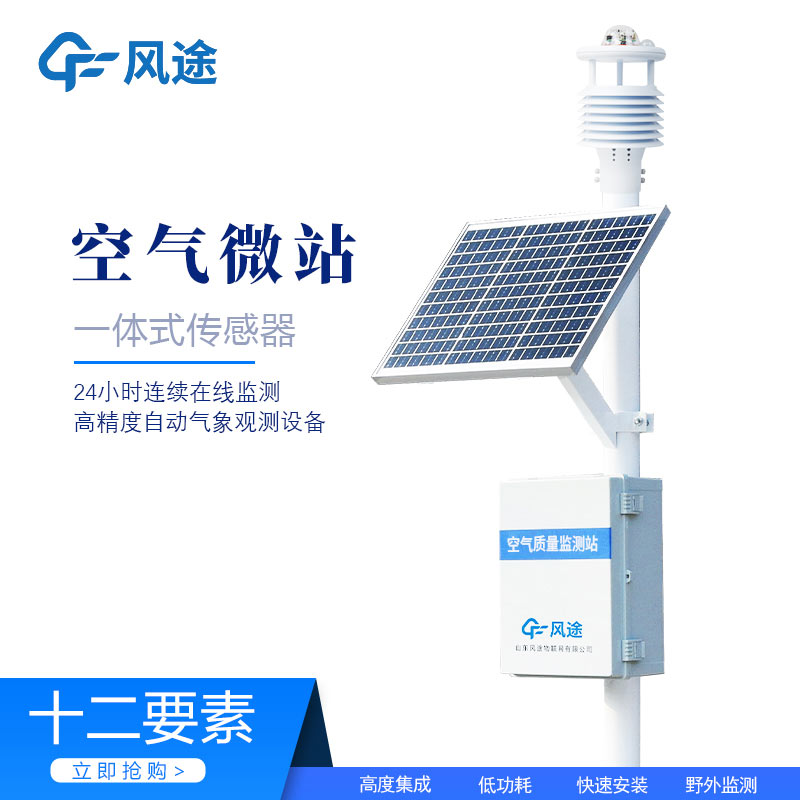
Air quality monitoring station is a small device that integrates multiple air quality monitoring instruments and sensors and can monitor and measure various pollutants in the air in real time. Its working principle includes collecting concentration data of pollutants in the air, processing and analyzing these data, and transmitting them to a central database through wireless communication technology.
The air quality monitoring station is very powerful. It can monitor various pollutants in the air in real time, such as PM2.5, PM10, nitrogen dioxide, etc., predict the changing trend of air quality, and provide personalized suggestions and solutions.
The application field of air quality monitoring station is wide. It can be installed in urban public places, schools, office areas, and homes to provide people with real-time air quality data and help them make correct action decisions.
The COD Analyzer is an instrument used to monitor the Chemical Oxygen Demand (COD) in water bodies. It plays an extremely important role in fields such as environmental protection, water resource management, and industrial wastewater treatment. COD is a key indicator for measuring reducing substance...
Scientific research-type air quality monitoring station is mainly for multi-pollutant monitoring, with the help of physical and chemical, optical, meteorological, satellite and other types of monitoring instruments and methods, to comprehensively analyze the concentration of conventional and non-con...
how to use a rain gauge Placed in an open area, raindrops should drop directly to the sensor, should avoid secondary drops and continuous water impact....
Measuring wind direction is important for predicting the weather, guiding aviation and marine navigation, tracking environmental pollution, planning agricultural activities, optimising sporting events and harnessing wind power for electricity generation. Understanding wind direction helps us to bett...


 Skype
Skype
 whatsapp
 mail
mail