Shandong Fengtu IOT Technology Co., Ltd
Sales Manager:Ms. Emily Wang
Cel,Whatsapp,Wechat:+86 15898932201
Email:info@fengtutec.com
Add:No. 155 Optoelectronic Industry Accelerator, Gaoxin District, Weifang, Shandong, China


Sales Manager:Ms. Emily Wang
Cel,Whatsapp,Wechat:+86 15898932201
Email:info@fengtutec.com
Add:No. 155 Optoelectronic Industry Accelerator, Gaoxin District, Weifang, Shandong, China
time:2025-01-08 10:12:03 source:Weather Station viewed:728 time
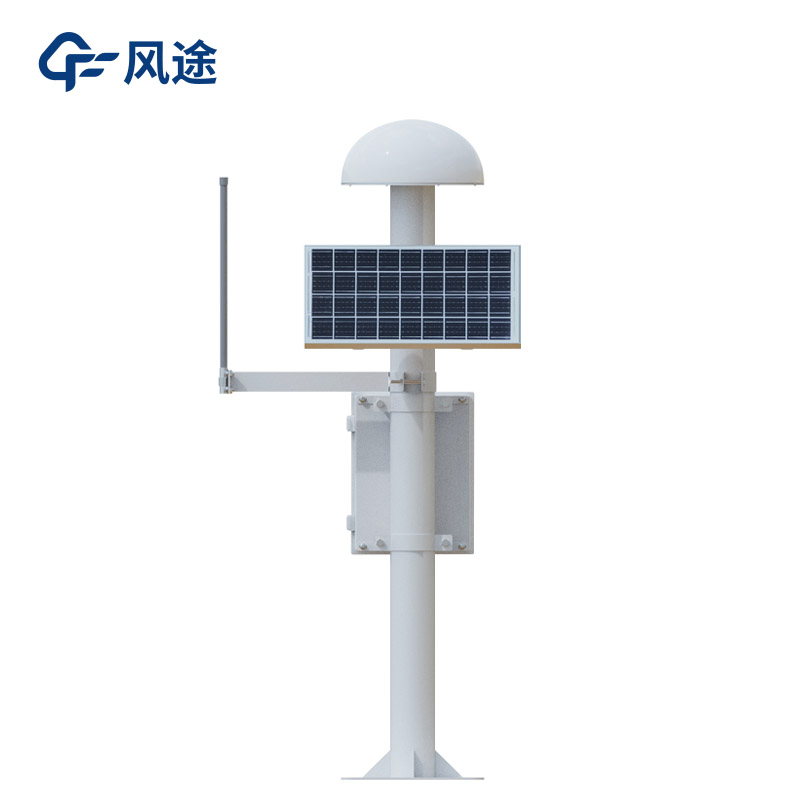
The GNSS monitoring station, based on the Global Navigation Satellite System, is a high-precision displacement monitoring device. It consists of a GNSS antenna, a solar panel, a main control chassis and a mounting bracket. It features high precision, low power consumption, high cost-performance ratio and convenient installation. The data is transmitted to the environmental monitoring platform via 4G or Ethernet. Powered by solar energy, it is not restricted by geographical terrain and is used for monitoring surface displacement and building deformation, such as landslide, slope displacement, bridge deformation, reservoir dam and mine geological disaster monitoring.
However, in some areas, although the stations are installed and monitored all day long, it is still difficult for the staff to detect abnormalities in advance. This is mostly due to incorrect installation or usage methods that affect the measurement results. The reference station should be installed far away from places with displacement changes. If both the measurement station and the reference station are installed in such places, measurement errors will occur. Among the seven errors in GNSS positioning, namely orbit, satellite, ionosphere, troposphere, multipath, receiver clock difference and receiver noise, the ionosphere error has the greatest impact.
When selecting the installation location of the GNSS monitoring station, the measurement station should be arranged in the disaster body area with large deformation, while the reference station should be set in the stable area outside the disaster body, far away from places where displacement changes may occur. The installation of the solar panel is very important. There should be no obstructions above it, otherwise the hot spot effect and the barrel effect of current may occur. The optimal installation angle of the solar panel should be within 20 degrees towards the southwest direction, and the tilt angle should be between 30 and 45 degrees. The specific angle can be adjusted according to the local latitude.
The GNSS monitoring station needs to be installed in an open-air environment to ensure good satellite signal reception conditions. The monitoring location should be selected in an empty place to ensure that there are no large-area obstructions above the positive -15 degree elevation cutoff angle.
It is also necessary to pay attention to the following points: avoid installing in low-lying areas that are prone to water accumulation, stay away from electromagnetic interference that may be generated by underground pipelines, and avoid hidden areas with poor signal. This can ensure the accuracy of the monitoring data and provide a reliable basis for safety warnings and decision-making.
Measuring wind direction is important for predicting the weather, guiding aviation and marine navigation, tracking environmental pollution, planning agricultural activities, optimising sporting events and harnessing wind power for electricity generation. Understanding wind direction helps us to bett...
Oilseed rape is an important cash crop in the south. Using agricultural meteorological observation data, we can count the important meteorological elements affecting the growth of oilseed rape, mainly including light, precipitation and temperature, etc. Through trend prediction of climate, we can re...
GNSS sensor employs Differential RTK technology to achieve millimeter-level displacement monitoring. Widely applied in engineering fields such as dam safety monitoring, bridge structural health assessment, and landslide early warning systems, it is capable of accurately detecting minute displa...
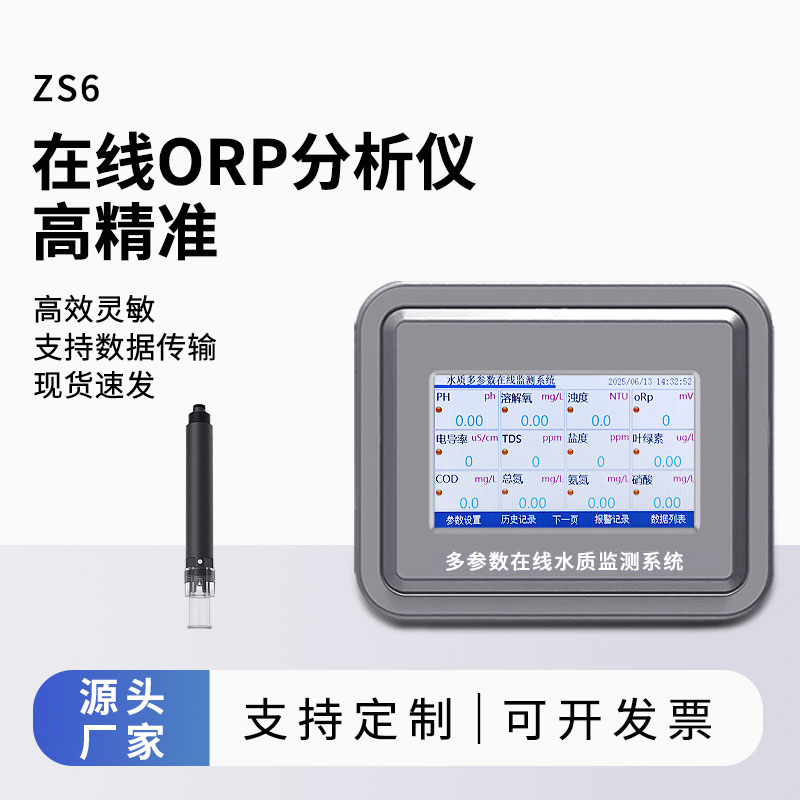
Oxidation-Reduction Potential, namely ORP, reflects the difference in the oxidation-reduction potential between the indicating electrode and the reference electrode in a liquid, and it can provide a comprehensive assessment of the oxidation-reduction state of the entire system. In a wastewater treat...


 Skype
Skype
 whatsapp
 mail
mail