Shandong Fengtu IOT Technology Co., Ltd
Sales Manager:Ms. Emily Wang
Cel,Whatsapp,Wechat:+86 15898932201
Email:info@fengtutec.com
Add:No. 155 Optoelectronic Industry Accelerator, Gaoxin District, Weifang, Shandong, China


Sales Manager:Ms. Emily Wang
Cel,Whatsapp,Wechat:+86 15898932201
Email:info@fengtutec.com
Add:No. 155 Optoelectronic Industry Accelerator, Gaoxin District, Weifang, Shandong, China
time:2025-04-25 09:33:23 source:Weather Station viewed:907 time
In sewage treatment plants, it is necessary to measure the pH value of the water body. This is because the pH value directly affects the activity of microorganisms in the sewage treatment system. Sewage treatment mainly relies on microorganisms to decompose pollutants. However, an environment with strong acids or alkalis will inhibit the growth and metabolism of microorganisms, and may even lead to the death of microorganisms, thus disrupting the normal operation of the entire biological treatment system. In addition, many sewage treatment processes, such as chemical precipitation and redox reactions, can only be carried out efficiently under specific pH conditions. Reasonable control of the pH value can improve the efficiency of sewage treatment and reduce the treatment cost. A pH value that meets the standard is a necessary condition for the up-to-standard discharge of sewage. If the pH value of the discharged sewage does not meet the standard, it will cause serious pollution to the receiving water body and the surrounding ecological environment.
Traditional methods for measuring the pH value include the test paper method, the indicator method, and the potentiometric method. The test paper method and the indicator method are simple to operate, but the measurement results are greatly affected by subjective factors, with relatively low precision, and they cannot achieve real-time monitoring. Although the potentiometric method has a relatively high measurement precision, the manual operation process is cumbersome, and it cannot promptly reflect the dynamic changes of the pH value of the water body.
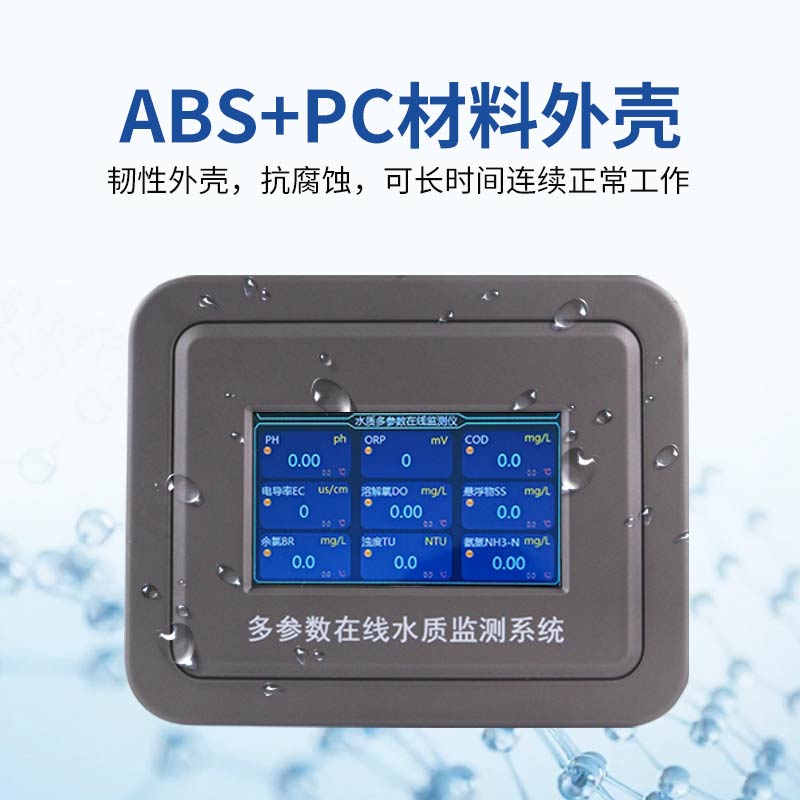
The PH Analyzer FT-ZS3 is used in sewage treatment plants. Based on the principle of the potentiometric method, it is equipped with a high-precision pH electrode and is matched with an intelligent data processing system, which can realize continuous and automatic monitoring of the pH value of the water body. Its measurement data is accurate, and the response speed is fast. It can transmit the measurement results to the control system in real-time, making it convenient for the staff to adjust the parameters of the sewage treatment process in a timely manner. The automatic calibration function can effectively reduce the measurement errors caused by electrode drift, ensuring the stability and reliability of the data. This instrument is compact and has a high protection level, and it can adapt to the complex environment of sewage treatment plants, which is humid and highly corrosive. It can effectively resist the erosion of sewage and moisture, reduce the equipment maintenance cost, and extend the service life. It is a reliable tool for accurately controlling the pH value of the water quality in sewage treatment plants.
Environmental Sensors integrates six monitoring functions—temperature, humidity, illumination, PM2.5, PM10, and noise—delivering measurement accuracies of ±0.3°C for temperature, ±3% RH for humidity, and ±1.5 dB for noise. Data for all parameters is output simultaneously via an RS485 int...
Agricultural mini-weather stations are an important technical tool in agricultural production activities and one of the manifestations of smart agriculture. In the process of China's agricultural development, agricultural weather information has always played an extremely important role, which n...
what is rain gauge is a tool for measuring how much rain falls in a particular area over a period of time, and meteorologists use rain gauges to determine how much rain falls in a particular area....
In the wave of smart agriculture, the demand for agricultural smart sensors is rising rapidly, and smart sensors made in China urgently need to accelerate development to meet this market demand. The healthy growth of crops is closely linked to environmental factors such as temperature, humidity and...


 Skype
Skype
 whatsapp
 mail
mail