Shandong Fengtu IOT Technology Co., Ltd
Sales Manager:Ms. Emily Wang
Cel,Whatsapp,Wechat:+86 15898932201
Email:info@fengtutec.com
Add:No. 155 Optoelectronic Industry Accelerator, Gaoxin District, Weifang, Shandong, China


Sales Manager:Ms. Emily Wang
Cel,Whatsapp,Wechat:+86 15898932201
Email:info@fengtutec.com
Add:No. 155 Optoelectronic Industry Accelerator, Gaoxin District, Weifang, Shandong, China
time:2026-06-24 09:18:44 source:Weather Station viewed:70 time
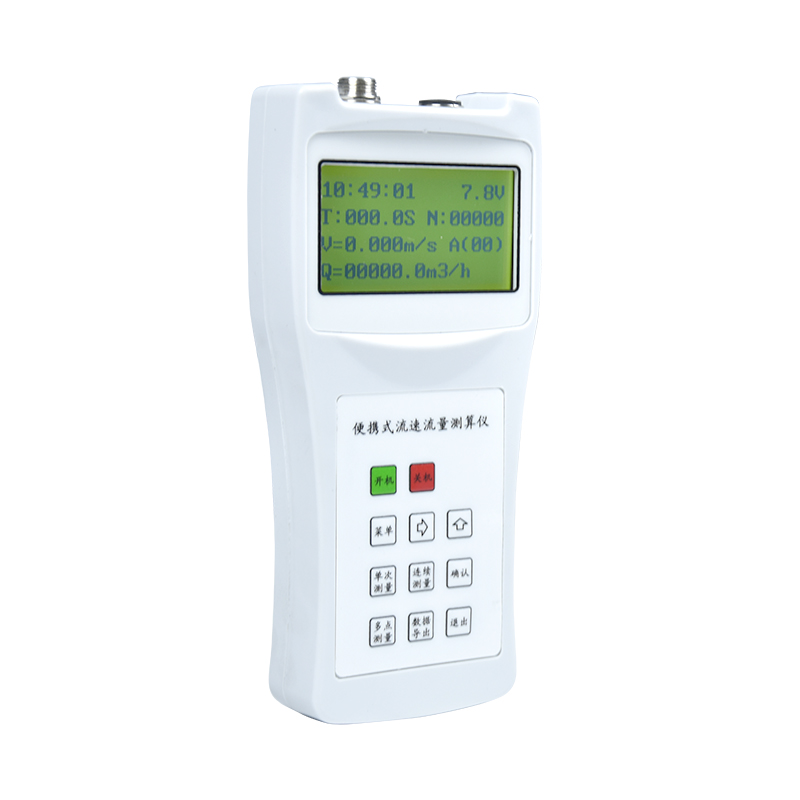
Water Flow Meter is a general-purpose instrument used in hydrological testing to measure the time-averaged flow velocity at cross-sections of rivers, lakes, reservoirs, and canals. It has a velocity measurement range of 0.04 to 10.00 meters per second, a measurement error of no more than 1.5%, and outputs a magnetically excited switch contact on/off signal. It is widely used in water conservancy, environmental protection, and agricultural irrigation.
Water Flow Meter is a general-purpose instrument for measuring flow velocity in hydrological testing, primarily used for measuring the time-averaged flow velocity at predetermined measuring points in cross-sections of rivers, lakes, reservoirs, and canals. This instrument is widely applicable to hydrological testing, water conservancy surveys, farmland irrigation, runoff experiments, and can also be used in hydropower, environmental protection, mining, transportation, geology, research institutes, and municipal industries for monitoring related flow velocities or flow rates. Water Flow Meter employs ultra-low power consumption circuit design and fully digital signal processing technology, ensuring stable, reliable, and high-accuracy measurements.
From a working principle perspective, Water Flow Meter current meters are mainly classified into propeller-type, ultrasonic time-of-flight method, and Doppler type based on their sensing principles. Propeller-type current meters are currently the most widely used conventional measuring instruments in hydrological surveys. Their working principle is that the water flow drives the propeller of the sensing element to generate rotational motion. There is a functional relationship between the rotation rate and the flow velocity, determined through calibration flume experiments. During measurement, the water force drives the propeller to rotate, and the built-in signal device generates a rotational signal. The flow velocity can be calculated by the total number of rotations during the measurement period. Propeller-type current meters use a built-in Hall sensor to detect the propeller rotation speed, converting the mechanical rotation into an electrical pulse signal. The pulse frequency is linearly related to the flow velocity.
In terms of technical specifications, the velocity measurement range of Water Flow Meter is typically from 0.04 to 10.00 meters per second, with a measurement error not exceeding 1.5%. The output signal is a magnetically excited switch contact on/off signal. The instrument is equipped with an LCD screen, supporting real-time data display. Measurement methods include rod positioning measurement and cable suspension positioning measurement. The communication interface supports RS232, enabling data transmission with a computer. Flow calculation is based on the velocity-area method; by inputting cross-sectional parameters, instantaneous flow rate and cumulative total can be automatically generated.
The Water Flow Meter instrument features a portable design, is lightweight, compact, and easy to carry. It is suitable for mobile measurement scenarios without a power source, and operates within a temperature range of 0 to 50 degrees Celsius. In practical applications, this instrument can be used for flow calculation in small irrigation channels, drainage monitoring in sewage treatment plants, urban flood control and drainage, and velocity and flow measurement in water conservancy projects. For maintenance, after each use, the flow meter and measuring rod should be rinsed with clean water and dried with a towel before storage. If not used for extended periods, it should be recharged periodically.
The principle of the ultrasonic wind speed and direction recorder is to use the ultrasonic time difference method to achieve wind speed measurement. The speed of sound propagation is superimposed on the speed of airflow in the direction of the wind. If the ultrasonic wave propagates in the same dire...
environmental sensor can monitor the environment of negative oxygen ions, pm2.5, pm10, temperature, humidity, air pressure, oxygen content, noise, wind speed, wind direction and other parameters....
The meteorological environment monitoring sensor FT-WQX10 is a meteorological sensor launched by Fengtu Technology. It is a new type of meteorological monitor based on the Internet of Things technology developed by Fengtu Technology. It processes and analyzes atmospheric data to achieve remote monit...
What are the roles of meteorological environment monitors? In real life, people's demand for meteorological services is increasing, and there is a keen need for more accurate and timely access to all kinds of weather information. Therefore, meteorological environment detectors have gained wide a...


 Skype
Skype
 whatsapp
 mail
mail