Shandong Fengtu IOT Technology Co., Ltd
Sales Manager:Ms. Emily Wang
Cel,Whatsapp,Wechat:+86 15898932201
Email:info@fengtutec.com
Add:No. 155 Optoelectronic Industry Accelerator, Gaoxin District, Weifang, Shandong, China


Sales Manager:Ms. Emily Wang
Cel,Whatsapp,Wechat:+86 15898932201
Email:info@fengtutec.com
Add:No. 155 Optoelectronic Industry Accelerator, Gaoxin District, Weifang, Shandong, China
time:2026-06-18 09:17:56 source:Weather Station viewed:92 time
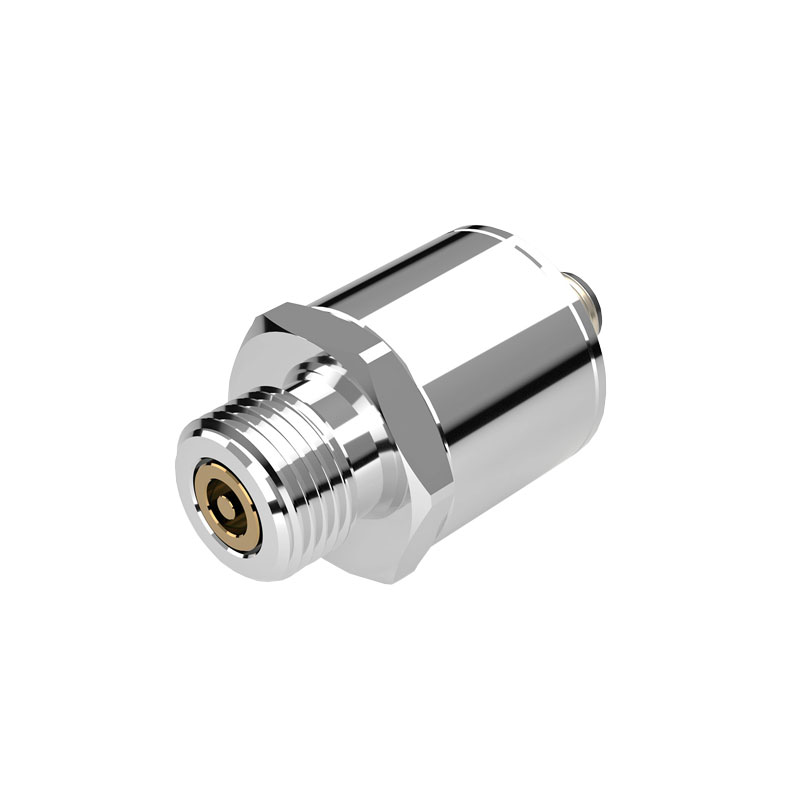
Based on electrochemical impedance spectroscopy (EIS), Oil conductivity sensor measures the resistivity changes of fire-resistant oils and lubricating oils online. This sensor reflects additive loss, aging, and contamination status through impedance spectroscopy analysis. It is suitable for the power and chemical industries, reducing offline monitoring frequency, optimizing oil change cycles, and improving equipment maintenance efficiency.
Oil conductivity sensor is a measurement device specifically designed for online oil monitoring. Its core function is to continuously detect the volume resistivity of insulating oils, fire-resistant oils, and various lubricating oils. Resistivity is a physical quantity reflecting the ionic conductivity of oil. When oil ages, oxidation products increase, or it is contaminated by moisture and particles, resistivity decreases significantly. Therefore, by tracking real-time changes in resistivity, the health status of the oil can be indirectly determined.
Oil conductivity sensor employs electrochemical impedance spectroscopy, which involves applying a small sinusoidal AC voltage to the oil sample and scanning within a certain frequency range to measure the complex impedance of the oil. By fitting the equivalent circuit of the impedance spectrum, various parameters such as resistance and capacitance can be extracted. The real part of the impedance in the low-frequency band directly corresponds to the volume resistivity, while the dielectric response in the high-frequency band reflects the concentration of polar molecules in the oil. This multi-parameter measurement capability allows the sensor to not only provide absolute resistivity values but also distinguish the different effects of additive consumption and external contamination on oil quality. For example, a reduction in antioxidants mainly leads to a decrease in low-frequency resistivity, while moisture intrusion causes an overall downward shift in impedance across the entire frequency band.
In application, the Oil conductivity sensor sensor can be installed in the oil circulation pipeline of the main equipment, connected via a tee or bypass oil line, with oil continuously flowing through the sensor electrode cavity. The sensor integrates a temperature probe, automatically converting the measurement results to a standard temperature (e.g., 20℃ or 40℃) to eliminate temperature interference with resistivity. Data is output as analog or digital signals and uploaded to the monitoring system, where a lower limit alarm value for resistivity is set. When the measured value falls below the threshold, the system prompts operators to pay closer attention or arrange for oil regeneration.
Compared to traditional periodic offline sampling and testing, the online Oil conductivity sensor sensor provides higher temporal resolution. Offline analysis is typically performed monthly or quarterly, failing to capture sudden contamination events. Sensors, however, perform measurements every second, enabling timely detection of sudden oil quality changes and preventing prolonged operation of equipment in a deteriorated state. Simultaneously, continuous data accumulation helps establish individualized oil degradation curves for each piece of equipment, predicting remaining service life based on slope changes, thus facilitating condition-based maintenance. This strategy avoids the waste associated with fixed-cycle oil changes and reduces equipment wear caused by delayed oil changes.
In the power industry, Oil conductivity sensor is widely used in large transformers, turbine speed control systems, and fire-resistant oil systems. Petrochemical companies also employ similar monitoring methods for the lubricating oil of reciprocating compressors and centrifugal pumps. Research and commercial inspection departments utilize this sensor for rapid oil quality comparison. Overall, Oil conductivity sensor, with its real-time performance, continuity, and low maintenance requirements, has become an important online tool in oil condition monitoring systems, effectively reducing operation and maintenance costs and improving equipment reliability.
description of a rain gauge is an instrument used by meteorologists and hydrologists to collect and measure the amount of liquid precipitation in a predetermined area, capable of measuring rainfall over a period of time....
The GNSS (Global Navigation Satellite System) monitor is a displacement measuring device based on the global navigation satellite system. When in operation, the antenna of the monitor fully receives satellite signals, which contain crucial information such as satellite orientation and time. The rece...
instruments of weather and their uses Instruments of weather and their uses There are many instruments that collect weather data, usually the following: thermometers, barometers, hygrometers, anemometers, total radiometers, etc....
Most of the new energy research and development work is actually carried out in a relatively open environment, especially for wind and solar energy research and development, often due to the installation of the environment is very open caused by some important devices are easily affected by changes...


 Skype
Skype
 whatsapp
 mail
mail