Shandong Fengtu IOT Technology Co., Ltd
Sales Manager:Ms. Emily Wang
Cel,Whatsapp,Wechat:+86 15898932201
Email:info@fengtutec.com
Add:No. 155 Optoelectronic Industry Accelerator, Gaoxin District, Weifang, Shandong, China


Sales Manager:Ms. Emily Wang
Cel,Whatsapp,Wechat:+86 15898932201
Email:info@fengtutec.com
Add:No. 155 Optoelectronic Industry Accelerator, Gaoxin District, Weifang, Shandong, China
time:2024-04-08 08:46:54 source:Weather Station viewed:1122 time
When choosing an anemometer, there are a few key factors to consider to decide on the best device for your needs:
1. Measurement needs: If you need precise data, choose a certified anemometer; if it is just for general observation, a simple anemometer will suffice.
2. Environmental suitability: If you are using it in a cold or snowy place, choose an anemometer suitable for this environment.
3. Budget: Depending on your budget, you can choose anemometers in different price ranges.
Depending on your specific needs, you can consider the following options:
- If you need highly accurate measurements, look for an anemometer designed for precise data.
- If you only need basic measurements, choose a basic model.
- If you will be using it in snowy or icy conditions, choose an anemometer with freeze protection.
- If you are on a budget, choose a less expensive anemometer.
- If you want to measure light winds, choose an anemometer that is sensitive to breezes.
- If durability is your primary concern, choose a sturdy and durable anemometer.
- If you also need to measure wind speed and direction upwind and downwind, choose an anemometer with this feature.
- If you want to use it in a marine environment, choose an anemometer that is suitable for marine conditions.
- If you need an analogue output, choose an anemometer that offers it.
- If you need a digital output, choose an anemometer that supports digital signals.
- If you want to measure more information about the wind, such as wind conditions or flux, choose a multifunction anemometer.
With these guidelines, you can more easily find the right anemometer for your needs.
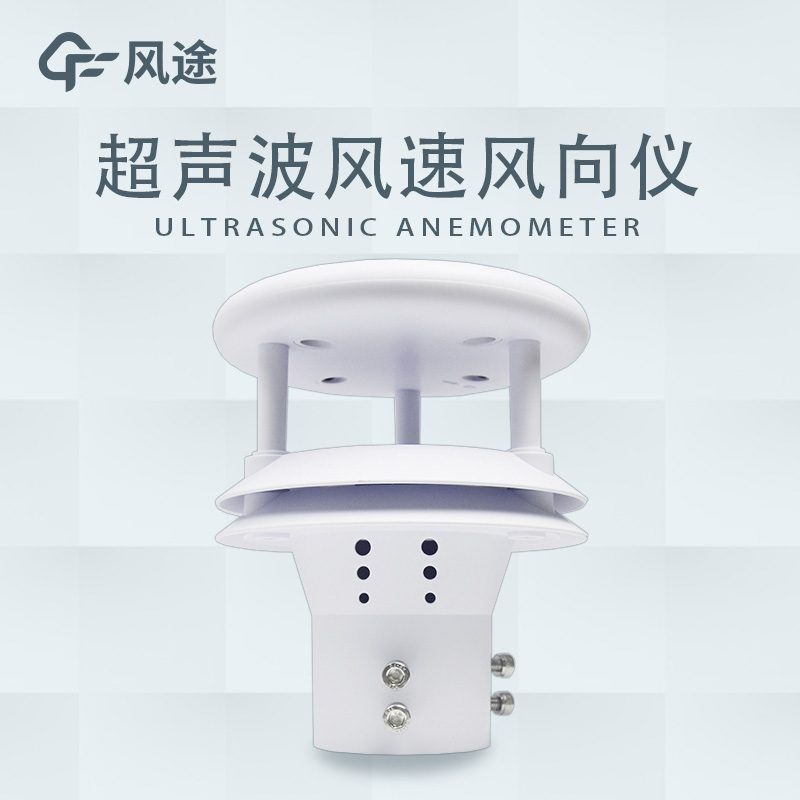
The main advantage of ultrasonic anemometers is that they measure wind speed in real time, are not affected by time delays and do not require regular maintenance as they have no mechanical parts. Models with heating capabilities work well in snow and ice conditions. However, this type of anemometer requires a power supply to operate.
With advances in technology, facility-based agriculture is emerging as a model of agriculture that utilizes greenhouses and related equipment to control the environment in which crops are grown. It is characterized by high yield, high efficiency and high quality, and is a technology-intensive form o...
The water regime monitoring system is applied to the water conservancy management department to remotely monitor the water level and rainfall of the reservoir and collect real-time data, and provide accurate, timely and automatic on-site monitoring information to ensure the safe operation and manage...
As industries such as transport, aviation and navigation continue to develop, weather phenomena such as atmospheric pollution and haze have become important factors in limiting the development of these industries. In this context, there is increasing interest in the use of visibility monitoring inst...
Rainwater online monitoring system can effectively monitor the rainfall situation in real time, and also has data storage and analysis functions, which plays a very important role in rainfall warning and flood prediction. Windway Technology is a manufacturer of rainwater online monitoring system, pr...


 Skype
Skype
 whatsapp
 mail
mail