Shandong Fengtu IOT Technology Co., Ltd
Sales Manager:Ms. Emily Wang
Cel,Whatsapp,Wechat:+86 15898932201
Email:info@fengtutec.com
Add:No. 155 Optoelectronic Industry Accelerator, Gaoxin District, Weifang, Shandong, China


Sales Manager:Ms. Emily Wang
Cel,Whatsapp,Wechat:+86 15898932201
Email:info@fengtutec.com
Add:No. 155 Optoelectronic Industry Accelerator, Gaoxin District, Weifang, Shandong, China
time:2024-04-09 08:39:38 source:Weather Station viewed:1041 time
An anemometer is a tool used to measure wind speed and direction. There are several ways to measure wind, but there are three main types. It is crucial to pick the right anemometer for your needs.
A three-cup anemometer is an instrument that consists of two parts: a wind vane and an anemometer. This type of anemometer works through three vertically aligned cups that are able to rotate with the wind. When the wind blows, the cups rotate, and the speed of rotation reflects the magnitude of the wind. By observing the number of times the cups rotate, we can tell what the wind speed is. At the same time, the direction of rotation of the cup also tells us from which direction the wind is blowing. So, with a three-cup anemometer, we can not only know the wind speed, but also the direction of the wind.
A propeller anemometer is a sensor that combines a wind vane with an anemometer. This device has a propeller in front of it that turns when the wind blows. The faster the propeller turns, the greater the wind speed. We can calculate the wind speed by how fast the propeller is turning. This device has a tail at the back to indicate the direction of the wind. The device will determine the direction of the wind based on the direction in which the wind is blowing. So, a propeller anemometer measures both wind speed and wind direction.
Both of these types of instruments are very inexpensive, but they are prone to break down and require frequent maintenance, which doesn't add up to a low maintenance cost.
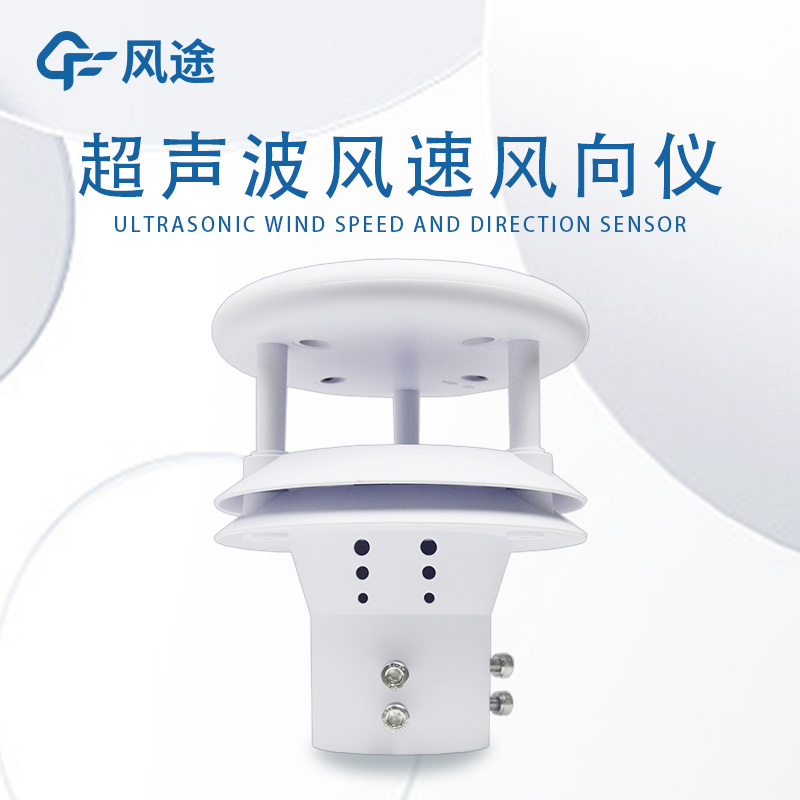
An ultrasonic anemometer is an instrument that uses sound waves to measure wind speed and direction. It calculates the speed and direction of the wind by comparing the time difference between sound waves travelling in two opposite directions. When the wind blows, the sound waves do not travel at the same speed in the downwind and upwind directions, and the direction and speed of the wind can be determined from this time difference. This type of instrument has no moving parts, so it reflects changes in the wind instantly and does not affect measurements over time. If equipped with a heating element (note that this is an optional feature), it can also prevent freezing and keep working properly in cold or icy environments.
This type of instrument will be a little more expensive, but it is subsequently maintenance-free and has no mechanical parts to wear out, which makes it last slightly longer and saves on subsequent repair expenses.
rainfall detection is a device designed to detect the presence and intensity of rainfall, which can detect changes in rainfall in real time, regardless of sunlight, dust, leaves, etc....
Doppler Flow Meter is a dedicated sensor for measuring water flow velocity in natural water bodies. It accurately calculates flow velocity by calculating frequency changes and is widely used in irrigation canals, municipal sewer pipes, and hydrological basins. It is suitable for hydrological m...
Rainfall is an important meteorological element, which needs to be closely monitored all the time. The rainfall monitoring station FT-YJ2 is an instrument launched by Fengtu Technology to closely monitor the rainfall changes in a region in real time. It is based on the Internet of Things technology...
Shandong Fengtu, a manufacturer of slope monitoring equipment, utilizes Differential RTK technology to achieve millimeter-level displacement monitoring, enabling continuous, all-weather online status assessment for structures such as highway slopes and tailings pond slopes. The equipment detec...


 Skype
Skype
 whatsapp
 mail
mail