Shandong Fengtu IOT Technology Co., Ltd
Sales Manager:Ms. Emily Wang
Cel,Whatsapp,Wechat:+86 15898932201
Email:info@fengtutec.com
Add:No. 155 Optoelectronic Industry Accelerator, Gaoxin District, Weifang, Shandong, China


Sales Manager:Ms. Emily Wang
Cel,Whatsapp,Wechat:+86 15898932201
Email:info@fengtutec.com
Add:No. 155 Optoelectronic Industry Accelerator, Gaoxin District, Weifang, Shandong, China
time:2026-04-01 09:40:59 source:Weather Station viewed:418 time
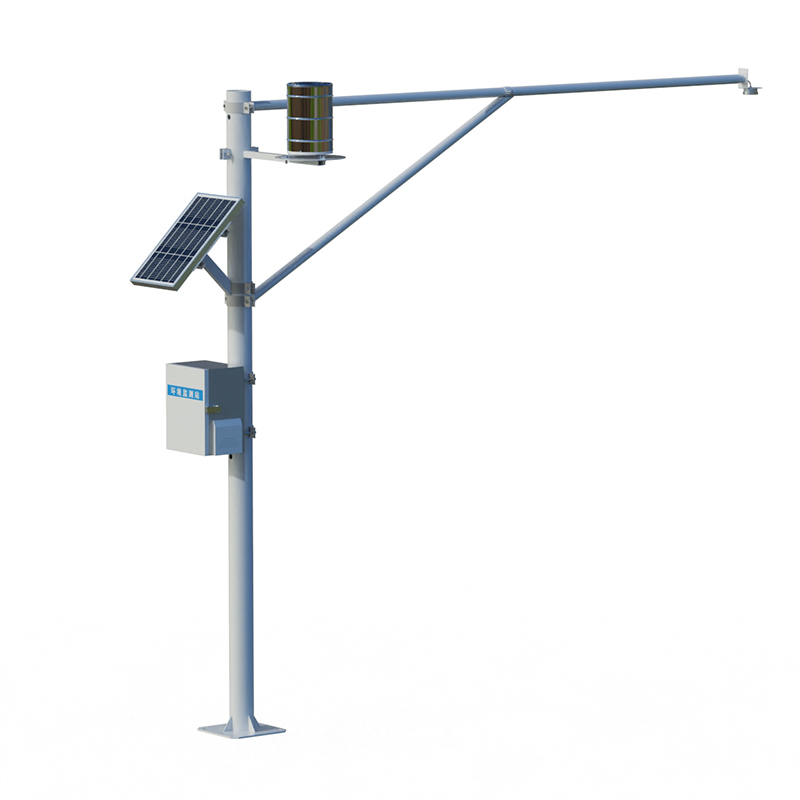
Hydrological Telemetry Rain Gauge Station Equipment utilizes a stainless steel rainfall sensor with a measurement range of 0–4 mm/min and an accuracy of ±0.2 mm. It transmits rainfall data to a monitoring platform via wireless remote transmission, automatically compiling daily, weekly, monthly, and annual rainfall statistics. This system is ideally suited for applications in reservoirs, river channels, flood control pumping stations, and similar environments.
Hydrological Telemetry Rain Gauge Station Equipment is an integrated, automated device specifically designed for the real-time monitoring of rainfall in settings such as reservoirs, lakes, river channels, flood control pumping stations, and irrigation canals. The device comprises four main components: a stainless steel rainfall sensor, a data collector, a solar power supply system, and a pole-mounted bracket. Its modular design facilitates rapid on-site installation and simplifies subsequent maintenance. The rainfall sensor features a tipping-bucket mechanism with a 200 mm collection aperture. It covers a precipitation intensity measurement range of 0 to 4 mm/min, offering a resolution of 0.2 mm and maintaining a measurement accuracy within ±0.2 mm—thereby meeting the technical requirements for rainfall data precision in water conservancy and hydrological monitoring applications.
The core functionality of Hydrological Telemetry Rain Gauge Station Equipment lies in the wireless remote transmission of collected rainfall data to a central monitoring platform. The data collector features a built-in GPRS or 4G universal communication module, supporting two data transmission modes: scheduled reporting and incremental reporting (triggered by changes in rainfall volume). The device can actively transmit data to the platform based on pre-configured time intervals or specific rainfall change thresholds. The transmitted data encompasses the rainfall volume for each collection interval, as well as daily, weekly, monthly, and annual totals. Upon receiving this data, the monitoring platform automatically parses, stores, and compiles the information, generating comprehensive rainfall reports across various time dimensions to provide essential data support for flood control dispatching and water resource management.
Regarding power supply, Hydrological Telemetry Rain Gauge Station Equipment employs a solar power system consisting of solar panels and a rechargeable battery pack. When paired with the data collector's low-power design, this system ensures continuous, normal operation for over 30 days, even during prolonged periods of overcast or rainy weather. The data collector also features a large-capacity internal storage module capable of temporarily caching rainfall data in the event of a communication outage; once signal connectivity is restored, the device automatically uploads the buffered data, thereby guaranteeing that no data is lost. The device enclosure complies with industrial-grade protection standards, and its operating temperature range spans from -30°C to 70°C, enabling it to meet the operational requirements of unattended field environments.
In practical applications, the Hydrological Telemetry Rain Gauge Station Equipment is widely deployed in locations such as reservoir areas, along river channels, at urban flood control pumping stations, and within agricultural irrigation canals. By providing real-time monitoring of precipitation intensity and cumulative rainfall, it supplies foundational data for flood warning systems, water resource scheduling, and irrigation district management. When rainfall exceeds a preset threshold, the monitoring platform automatically issues alerts, notifying management personnel to take timely countermeasures. The Hydrological Telemetry Rain Gauge Station Equipment facilitates the automated collection and remote transmission of rainfall data, effectively reducing the workload associated with manual observation while enhancing the timeliness and data reliability of hydrological monitoring.

Which is the best ultrasonic wind speed and direction meter?From the meteorological aspect, the meteorological monitoring station should always monitor the wind speed and direction, guide people's travel, timely disaster warning. Military, such as the launch of artillery shells, snipers shooting...
Traditional anemometers such as mechanical wind speed meters and cup anemometers rely on the rotation or swing of mechanical components like wind cups and vanes to sense wind speed and direction, presenting multiple limitations:Mechanical Wear & High Maintenance: Long-term use leads to friction...
Negative oxygen ion sensors monitor air quality in real time by measuring the concentration of negative oxygen ions in the air. Such sensors usually use electrochemical or optical principles to detect negative oxygen ions and convert the detected signals into readable data through electronic devices...
Ultrasonic Wind Speed And Direction Sensor is a wind speed and direction measuring instrument developed based on the principle of ultrasound. It utilizes the time difference in ultrasonic wave propagation to measure wind speed and direction....



 Skype
 whatsapp
 mail