Shandong Fengtu IOT Technology Co., Ltd
Sales Manager:Ms. Emily Wang
Cel,Whatsapp,Wechat:+86 15898932201
Email:info@fengtutec.com
Add:No. 155 Optoelectronic Industry Accelerator, Gaoxin District, Weifang, Shandong, China


Sales Manager:Ms. Emily Wang
Cel,Whatsapp,Wechat:+86 15898932201
Email:info@fengtutec.com
Add:No. 155 Optoelectronic Industry Accelerator, Gaoxin District, Weifang, Shandong, China
time:2026-05-15 09:55:42 source:Weather Station viewed:189 time
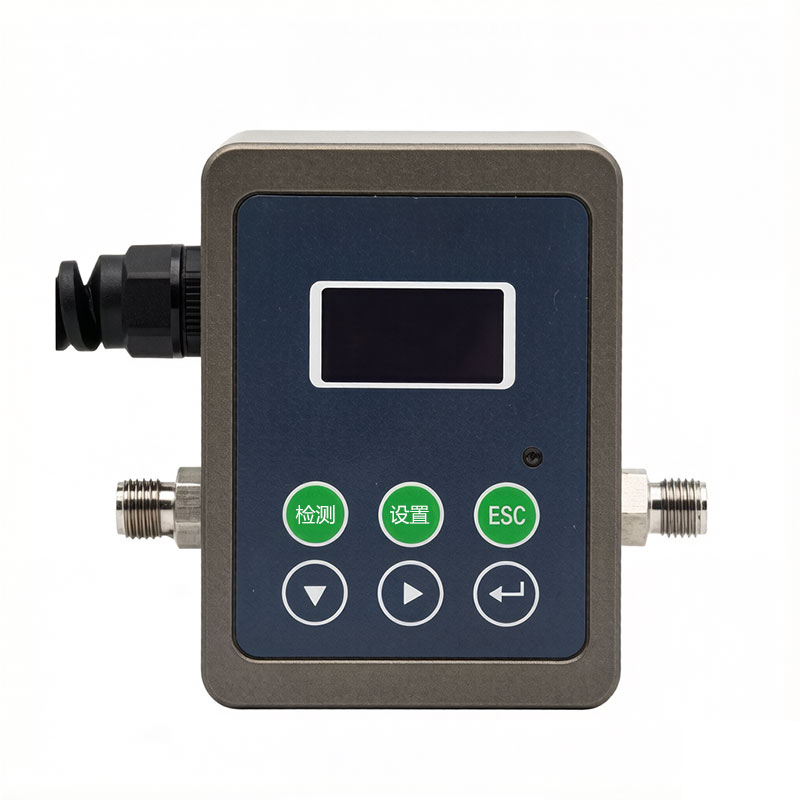
An online oil cleanliness analyzer is a real-time monitoring device that uses the optical obscuration method and a high-precision laser sensor. It can be directly installed in hydraulic or lubrication system pipelines to automatically detect the number and size distribution of solid particles in the oil. The instrument incorporates multiple contamination level standards, including ISO4406 and NAS1638, with a measurement range covering 1–100 μm and a counting accuracy of ±0.5 contamination levels. It is widely used for continuous monitoring and early warning of oil contamination in hydraulic stations, gearboxes, wind turbines, aerospace, and power equipment.
Online oil cleanliness analyzers differ significantly from traditional offline sampling and testing methods. Offline testing requires operators to extract oil samples from the equipment's tank and send them to a laboratory for analysis. From sampling to report generation, this process often takes hours or even days. During this time, the equipment may experience accelerated wear and valve jamming due to increased oil contamination. Online monitoring instruments are directly installed on the pipelines of hydraulic systems or lubrication lines, monitoring the oil flowing through the sensor in real time. The detection cycle can be set as short as once every 5 seconds, and the output of the detection results is almost synchronous with the oil flow, requiring no manual sampling. This continuous sampling and real-time output mode allows maintenance personnel to grasp the dynamic changes in oil contamination levels immediately and formulate response plans before the contamination level reaches the alarm threshold.
Regarding the detection principle, mainstream online oil cleanliness monitoring instruments adopt the light obscuration method (light blocking method) counting principle specified by the International Hydraulic Standards Committee. The instrument contains a semiconductor laser as a light source. When oil flows through the detection area of the laser sensor at a constant flow rate, solid particles in the oil block part of the light, causing a decrease in the light intensity received by the photodetector. The attenuation of light intensity is proportional to the particle size. By analyzing and statistically analyzing the distribution of the light intensity signal, the instrument can accurately calculate the number of particles in different particle size ranges per milliliter of oil. The detection range typically covers 1 micrometer to 600 micrometers, with a minimum sensitivity of 1 micrometer and a measurement repeatability of less than 5%. To ensure stable flow, some instruments also incorporate precision metering pumps, maintaining a constant sampling rate even under system pressure fluctuations.
Another important function of online oil cleanliness analyzers is the automatic determination of contamination levels. The instruments incorporate multiple mainstream international and domestic standards, including ISO4406, NAS1638, SAE4059, GJB420A, GJB420B, and GB/T14039. ISO4406 uses a three-digit code to represent contamination levels, corresponding to different particle size concentration levels. Each level increase in the code roughly doubles the particle concentration, with higher values indicating more severe contamination. NAS1638 divides particle counts into 12 levels (00-12) based on five particle size ranges, with the highest contamination size range determining the final contamination level. After completing particle counting, the online analyzer automatically compares the results to these standards to determine the current oil sample's contamination level, allowing users to directly assess whether the oil cleanliness meets equipment requirements without additional calculations. After testing, the instrument transmits data to a host computer or PLC system via RS232 or RS485 interface using the Modbus protocol, facilitating integration into existing equipment monitoring networks.
In engineering applications, the online oil cleanliness monitor can withstand high operating pressures and temperatures. The standard model can withstand 100 kg of pressure directly, and with an optional pressure reducing device, it can withstand up to 42 MPa. The oil temperature range is -20 to 125°C, and the ambient temperature range is -20 to 60°C. The instrument housing typically has an IP56 protection rating, resisting dust and splash water intrusion. These performance specifications enable the online monitor to perform continuous online monitoring tasks under harsh conditions such as wind turbine gearboxes, hydraulic stations, and tunnel boring machine lubrication systems. Through long-term continuous recording of oil contamination data, equipment maintenance personnel can establish unique contamination change curves for each piece of equipment, accurately determine the relationship between the contamination increase trend and equipment operating time, optimize oil change cycles and filter replacement frequency, and reduce production losses caused by unexpected equipment downtime.
Piezoelectric rain sensors use the impact measurement principle to measure the weight of individual raindrops and thus calculate the amount of rainfall. The raindrops are influenced by the weight of the raindrops and air resistance during their fall. When they reach the ground, the velocity is const...
The main task of the railroad rainfall monitoring system is to obtain real-time, accurate information on precipitation near the metro. It not only provides important rainfall information for the railroad transportation department, but also has great significance for studying the natural environment...
Icing on transmission lines can lead to numerous serious consequences, threatening the safety of the power system and the efficiency of power transmission. The thickening of ice layers will cause excessive load on conductors, resulting in sagging and breakage, which may lead to circuit breaks; trans...
The operation of highways is significantly affected by meteorological conditions, and inclement weather such as fog, snowstorms, typhoons and heavy rains can pose a greater threat to driving safety. Under these conditions, the passage of highways may be obstructed or even closed, seriously affecting...


 Skype
Skype
 whatsapp
 mail
mail