Shandong Fengtu IOT Technology Co., Ltd
Sales Manager:Ms. Emily Wang
Cel,Whatsapp,Wechat:+86 15898932201
Email:info@fengtutec.com
Add:No. 155 Optoelectronic Industry Accelerator, Gaoxin District, Weifang, Shandong, China


Sales Manager:Ms. Emily Wang
Cel,Whatsapp,Wechat:+86 15898932201
Email:info@fengtutec.com
Add:No. 155 Optoelectronic Industry Accelerator, Gaoxin District, Weifang, Shandong, China
time:2026-05-20 10:25:55 source:Weather Station viewed:195 time
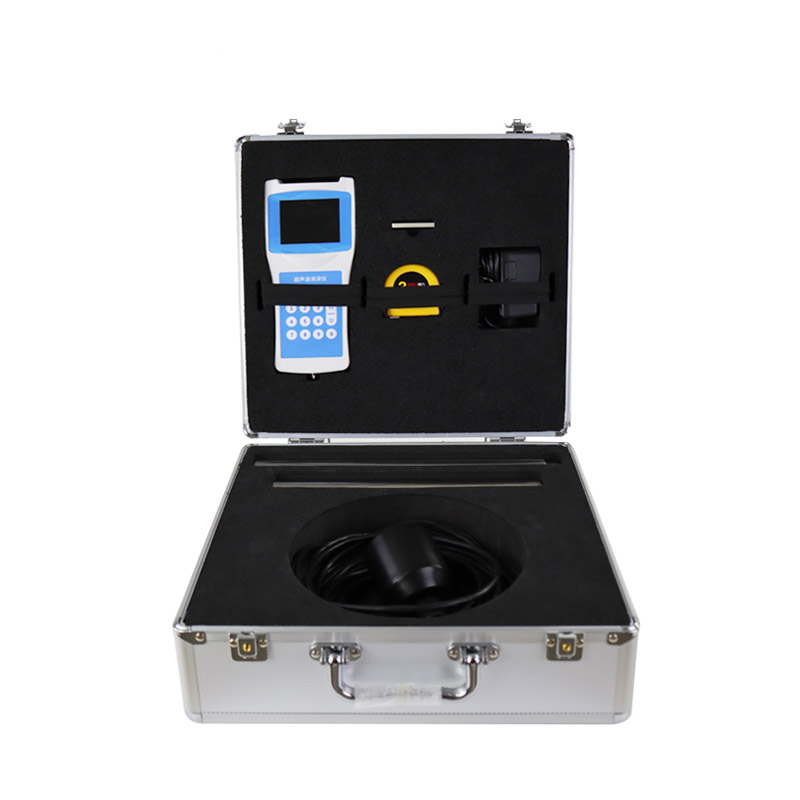
Depth finder is a portable ultrasonic depth sounder that uses ultrasonic measurement to determine water depth in real time. The instrument has a range of 0 to 50 meters, a blind zone of 0.5 meters, and can operate stably in still water and currents up to 5 meters per second. It is small and lightweight, equipped with an LCD screen and USB flash drive storage, and is suitable for various aquatic environments such as hydrological surveys, reservoir measurements, and river channel surveys.
The core value of the Depth finder lies in its adaptability to complex hydrological conditions. Traditional depth sounding tools such as sounding rods and sounding hammers are often inadequate when facing flowing water, not only significantly limited by navigation speed but also exhibiting very low measurement efficiency. Since its invention in 1918 by the French physicist P. Langevin, the echo sounder has achieved rapid and continuous depth measurement by leveraging the relatively constant speed of sound in water, significantly improving measurement efficiency. The modern Depth finder is further optimized based on this, and its greatest advantage lies in its ability to operate stably under water flow velocities of up to 5 m/s, meeting the practical needs of various scenarios such as hydrological surveys, hydropower plant reservoirs, lake and river surveys, and environmental water monitoring.
Depth finder works on the principle of the fixed sound velocity and reflection characteristics of ultrasound in water. The instrument places the ultrasonic transducer at a certain position on or below the water surface. The transducer emits ultrasonic pulses into the water, which are reflected back after hitting the bottom and received by the transducer. The system automatically calculates the water depth using a formula based on the propagation speed of the ultrasound in water and the time difference between transmission and reception. The entire measurement process takes only 0.1 to 1 second. When measuring water depth in flowing water, the water flow velocity and sediment content can interfere with the stable reception of ultrasonic signals. The Depth finder employs self-stabilizing measurement technology and fast tracking technology to filter disturbance signals in real time, ensuring accurate and reliable water depth data under flowing water conditions.
In terms of hardware design, the Depth finder fully considers the complexity of outdoor operating environments. The main unit uses an ABS engineering plastic shell, the sensor is also made of ABS material, and the measuring rod is made of stainless steel, providing a certain degree of corrosion resistance. The main unit weighs approximately 300 grams, and the sensor weighs approximately 700 grams, making it small and lightweight, easy to carry on small survey boats or temporary survey platforms. The ultrasonic transceiver circuit uses a dedicated large-scale integrated circuit with a component surface mount rate of 99%. Combined with an LCD display showing the depth measurement results, overall power consumption is kept low, enabling extended field surveying operations. For data management, the instrument is equipped with a large-capacity storage function, and measurement data can be exported as CSV or Excel files for easy subsequent data processing and analysis.
Depth finder measuring range is 0 to 50 meters, with a blind zone of 0.5 meters, a measurement accuracy of ±1% of the range, and an adjustable operating frequency from 200 to 2000 kHz. This range design meets the measurement needs of most inland and nearshore waters, including reservoirs, lakes, rivers, and shallow seas. In practical applications, Depth finder cables are widely installed on the outer or inner sides of medium and small vessels, with a cable length of approximately 10 meters. They are suitable for both static point measurements and dynamic measurements during vessel movement. For scenarios requiring regular monitoring of water depth changes, such as hydrological surveys, hydropower plant reservoir management, channel dredging, and port operations, Depth finder provides an efficient, portable, and relatively accurate measurement method.
The power distribution room, also known as the switch room, is an important hub in the building's power supply system. With the unpredictability of spring weather, monitoring the meteorological and environmental conditions around the distribution room has become particularly important. We must i...
The GNSS monitoring station, based on the Global Navigation Satellite System, is a high-precision displacement monitoring device. It consists of a GNSS antenna, a solar panel, a main control chassis and a mounting bracket. It features high precision, low power consumption, high cost-performance rati...
In recent years in the field of agriculture, the agricultural Internet of Things is mentioned very often, as we all know, the agricultural Internet of Things technology on the rapid development of the sudden agricultural help, but in the end how the integration of agriculture and Internet of Things...
Surface evaporation is the process by which a body of water releases water to the atmosphere through evaporation and is usually measured in millimeters of evaporation per day (mm/d). For example, annual evaporation may reach 980 mm, while monthly evaporation in June is 125 mm. Factors that affect th...


 Skype
Skype
 whatsapp
 mail
mail