Shandong Fengtu IOT Technology Co., Ltd
Sales Manager:Ms. Emily Wang
Cel,Whatsapp,Wechat:+86 15898932201
Email:info@fengtutec.com
Add:No. 155 Optoelectronic Industry Accelerator, Gaoxin District, Weifang, Shandong, China


Sales Manager:Ms. Emily Wang
Cel,Whatsapp,Wechat:+86 15898932201
Email:info@fengtutec.com
Add:No. 155 Optoelectronic Industry Accelerator, Gaoxin District, Weifang, Shandong, China
time:2026-06-15 09:36:52 source:Weather Station viewed:94 time
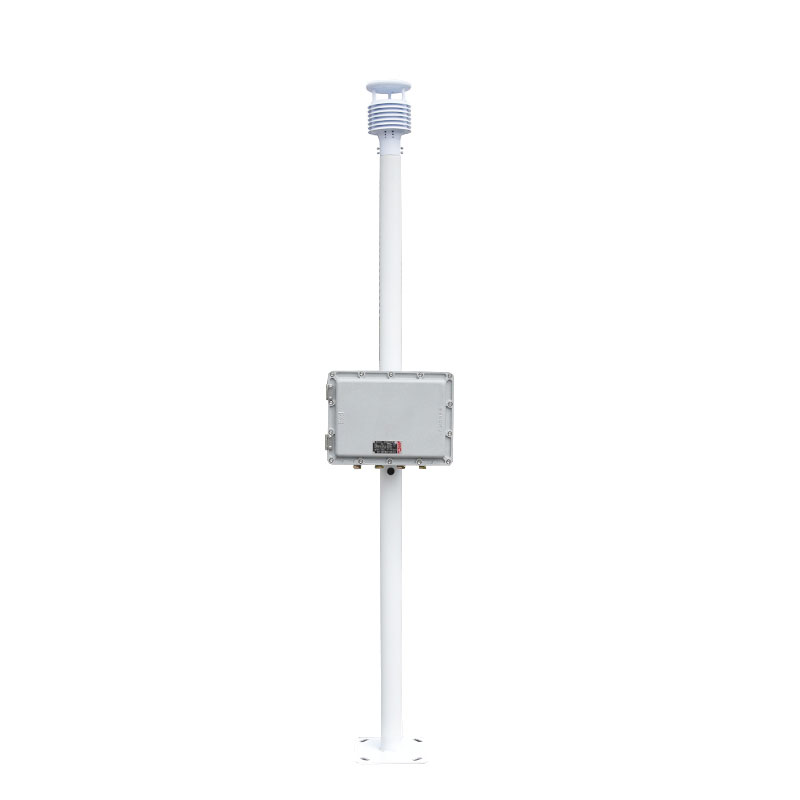
Mining Weather Station is an integrated meteorological monitoring device specifically designed for flammable and explosive environments such as chemical plants and oil depots. It integrates data acquisition, storage, and communication uploading, and supports interface with central control room PLC and DCS systems.
Mining Weather Station is a type of integrated meteorological monitoring device specifically developed for high-risk and special environments such as chemical plants, oil depots, gas stations, and petrochemical bases. It can collect data on various meteorological elements such as wind speed, wind direction, air temperature, humidity, and atmospheric pressure, and also has data storage, remote communication, and real-time display functions. The device adopts a high-protection design concept including corrosion resistance, explosion-proof, waterproof, shockproof, and dustproof, and can be used stably for a long time in chemical plants, oil depots, tunnels, mines, and other scenarios. Mining Weather Station typically has explosion-proof certification for its sensors and circuits, and adopts intrinsically safe (Ex ia/ib) or explosion-proof (Ex d) technology to ensure that no ignition source is generated in explosive gas or dust environments. The equipment casing is mostly made of stainless steel or special engineering plastics, manufactured to explosion-proof standards such as ExiaIICT4Ga and GB3836, effectively preventing the propagation of sparks and high temperatures. In terms of measurement accuracy, common models have a wind speed measurement range of 0 to 60 meters per second with an accuracy of ±0.1 meters per second, a wind direction measurement range of 0 to 360 degrees, an air temperature measurement range of -40 to 85 degrees Celsius, and an atmospheric pressure measurement range of 300 to 1100 hPa. The single-unit version has a data storage capacity of no less than 500,000 records, and some models have power consumption as low as 1.75W, suitable for long-term unattended operation.
Mining Weather Station integrates multiple monitoring modules for wind speed and direction, temperature and humidity, air pressure, precipitation, and atmospheric stability. The sensors and circuits are explosion-proof certified, allowing stable operation in high-risk areas. The equipment integrates data acquisition, storage, and communication uploading, and interfaces with backend host computer management software or central control room PLC/DCS systems via wired communication for data processing and analysis. In terms of application scenarios, Mining Weather Station is widely deployed around chemical plant reactors, on top of tank farms, and on loading and unloading platforms to monitor meteorological conditions and prevent safety accidents caused by severe weather or extreme climates. In oil depots, the equipment is deployed in oil storage tank areas, railway loading and unloading trestles, and oil and gas recovery unit areas to monitor the impact of strong winds and high temperatures on oil and gas volatilization in real time, and to prevent explosion hazards caused by static electricity by monitoring humidity. In mines and tunnels, the equipment is deployed at ventilation openings and working faces to monitor meteorological conditions such as temperature, humidity, and wind direction and speed to prevent gas explosions and equipment short circuits. The emergence of Mining Weather Station effectively improves the automation level of meteorological monitoring in high-risk locations, eliminates safety hazards associated with manual inspections in flammable and explosive environments, and provides scientific basis and real-time data support for chemical safety production management.
What does rain gauge Do is a meteorological instrument used to measure the amount of precipitation in a specific area over a specific time period, specifically rainfall....
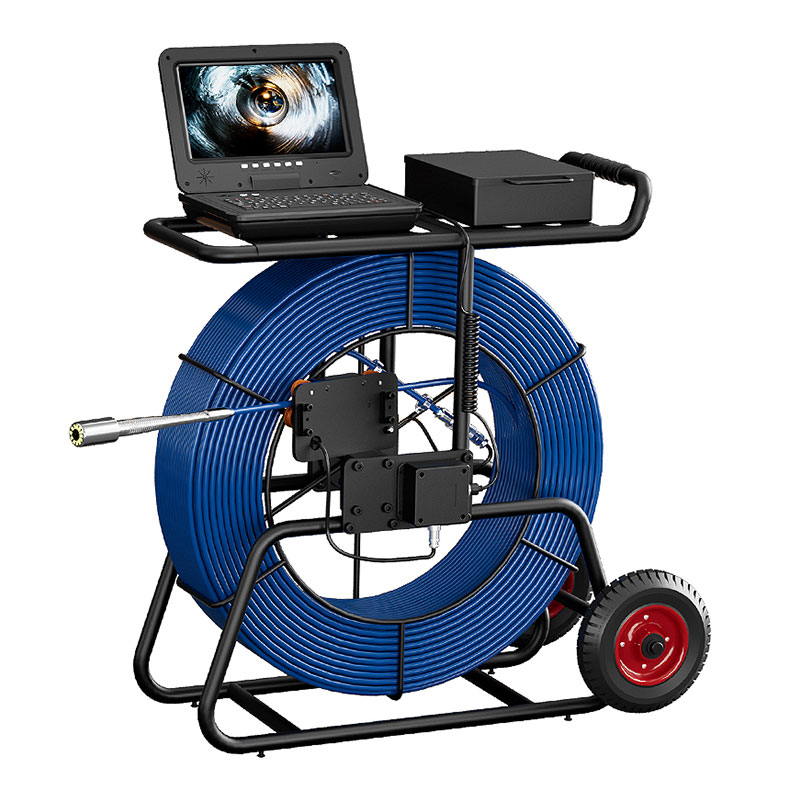
Deep beneath the city, drainage networks are responsible for collecting and conveying various liquids, including domestic sewage, industrial wastewater, and rainwater, ensuring these fluids flow smoothly to wastewater treatment plants or natural water bodies to maintain urban operations and environm...
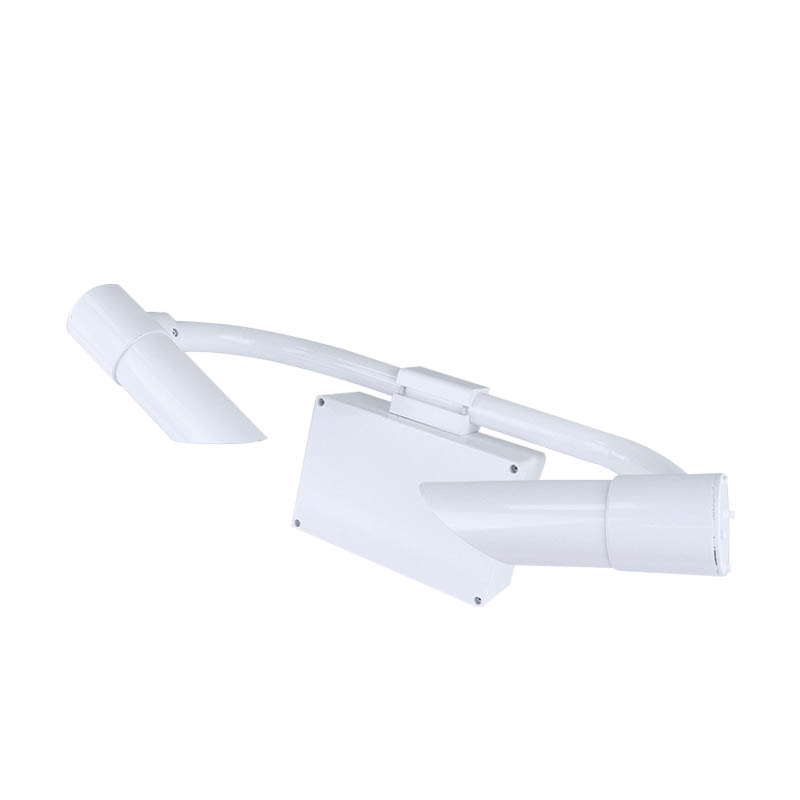
In the fields of atmospheric and tunnel environment detection, every data point is crucial for ensuring safety and the accuracy of decision - making. The FT - FT - SGT1 portable light transmittance detector emerges as your reliable detection partner.Operationally, the FT - SGT1 detector is extremely...
Although ultrasonic and mechanical wind speed measurement sensors are similar at the basic conceptual level, due to the differences in their designs, their operating modes each possess unique characteristics. Therefore, it is of great significance to clarify the advantages and disadvantages of these...



 Skype
Skype
 whatsapp
 mail
mail