Shandong Fengtu IOT Technology Co., Ltd
Sales Manager:Ms. Emily Wang
Cel,Whatsapp,Wechat:+86 15898932201
Email:info@fengtutec.com
Add:No. 155 Optoelectronic Industry Accelerator, Gaoxin District, Weifang, Shandong, China


Sales Manager:Ms. Emily Wang
Cel,Whatsapp,Wechat:+86 15898932201
Email:info@fengtutec.com
Add:No. 155 Optoelectronic Industry Accelerator, Gaoxin District, Weifang, Shandong, China
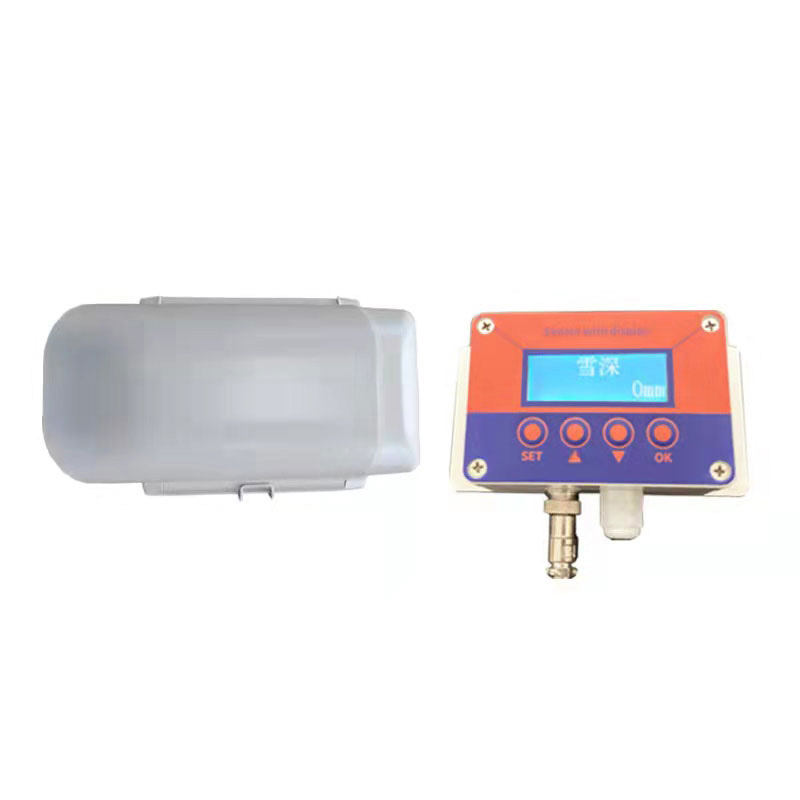
Model:FT-JX1
Brand:fengtu
1.Snow level sensor overview
Snow level sensor uses visible laser to measure snow depth, providing low-cost, remote snow depth measurement for snow professionals.Water is the foundation for the existence of all living things on Earth. The changes and movements of water have created the world we have today. Snowfall is an important part of the water cycle. Snowfall has a certain impact on the balanced development of the ecological environment and people's lives and production.
The automatic snow depth monitoring station is a set of professional equipment for real-time monitoring of snowfall information launched by our company based on many years of experience in manufacturing meteorological and environmental instruments. The equipment uses laser snow recognition and measurement technology to overcome the shortcomings of ultrasonic, electromagnetic wave, weight and other types of sensors that cannot recognize snow, thereby achieving extremely high detection accuracy. By monitoring the distance to the location, the thickness of the snow is obtained and the snowfall per unit time is analyzed. The equipment can be used as an independent automatic snow depth monitoring alarm system, and can also be networked to form a diversified network monitoring.
Application scope: Widely used in meteorological stations, port and terminal safety monitoring, road traffic safety monitoring, aviation monitoring, construction safety monitoring, agricultural production monitoring, hydrology and water conservancy and many other fields.
2. Snow level sensor laser ranging principle
The snow depth sensor uses the principle of phase laser rangefinder to measure the snow depth. Phase is the frequency of the radio band. Laser ranging uses the amplitude modulation of the laser beam and measures the phase delay caused by the modulated light going back and forth along the measuring line once. Then, according to the wavelength of the modulated light, the distance represented by this phase delay is converted. That is, the time required for the light to go back and forth along the measuring line is measured indirectly, thereby solving the snow depth.
3. Snow level sensor technical parameters
| powered by | DC12-15V | |
| Measuring range | 0.05~3m | |
| Measurement accuracy (standard deviation) | ±1.0mm | |
| Signal output | RS485 | |
| Distance Units | m | |
| Laser Type | 620~690nm | |
| Laser Class | Level II, <1mW | |
| The spot diameter at a distance m | 6mm@10m, 30mm@50m | |
| Single measurement time | 0.05~1s | |
| Protection level | IP65 | |
| Operating temperature | -40~+50℃ | |
| Storage temperature | -20~+80℃ | |
| weight | ||
| Dimensions (length x width x height) | ||
| Implementation Standards | GB/T 14267-2009 | |
| Power consumption | standard | 0.9W |
| heating | 14W | |
| Heating method | Automatic temperature control | |
Remark:
For different measurement targets and measurement environments, excessive ambient light intensity, high or low ambient temperature, weak or strong target reflection, or rough target surface may cause the measurement range to be shortened or cause large errors in the measurement results.
Working principle:
Measurement method:
Zero adjustment is required for initial installation or after moving the installation location. Press and hold "SET" for 5 seconds to complete the zero adjustment.
Working principle of the sensor: When there is snow (snow depth is greater than 10mm), data is collected once every 10 minutes; when there is no snow, data is collected once every 30 minutes.
Heating time in the cavity: When the temperature in the cavity is below 0 degrees, turn on the heating mode and heat for 5 minutes each time.
Soil moisture is a measure of soil moisture and is extremely critical to agricultural production as it directly affects the growing conditions of crops. Moisture content is measured by the percentage of soil water content, which can be expressed as the ratio of the weight of water in the soil to the...
A UAV-specific visibility meter is a device specifically designed to measure and monitor visibility in the atmosphere, with the aim of providing accurate visibility information to assist UAV operators in flight decision-making and flight safety management. Visibility is the distance at which the hum...
Momentum monitoring system is an agricultural equipment used to monitor parameters such as soil moisture and temperature in real time. It collects data through sensors and transmits the data to a monitoring centre or cloud platform through wireless communication technologies such as GPRS. These syst...
Crops cannot grow without the nourishment of the soil, so while exploring weather changes, it is equally crucial to have a good grasp of soil conditions. In order to achieve high quality and high yield of crops, planting must be arranged according to the characteristics and conditions of the land. S...


 Get a Free Quote
 Skype
Skype
 whatsapp
 mail
mail