Shandong Fengtu IOT Technology Co., Ltd
Sales Manager:Ms. Emily Wang
Cel,Whatsapp,Wechat:+86 15898932201
Email:info@fengtutec.com
Add:No. 155 Optoelectronic Industry Accelerator, Gaoxin District, Weifang, Shandong, China


Sales Manager:Ms. Emily Wang
Cel,Whatsapp,Wechat:+86 15898932201
Email:info@fengtutec.com
Add:No. 155 Optoelectronic Industry Accelerator, Gaoxin District, Weifang, Shandong, China
time:2026-02-26 10:28:37 source:Weather Station viewed:393 time
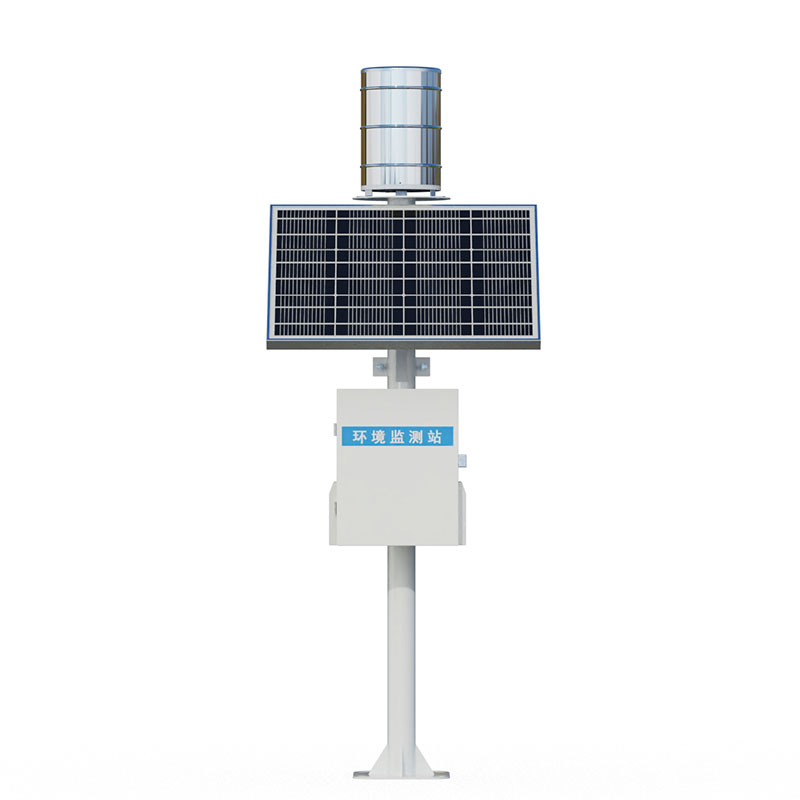
Rainfall monitor consists of a stainless steel rain gauge sensor, a data logger, a solar power system, and a pole support. It can log into an IoT platform to view real-time rainfall status, daily, weekly, monthly, and yearly rainfall data, and is widely used in monitoring and early warning of torrential rain and flash floods in mountainous areas.
Rainfall monitor is a specialized device for measuring rainfall. Its system mainly consists of a stainless steel rain gauge sensor, a data logger, a solar power system, and a pole support. This device adopts an integrated structural design, featuring easy installation and low power consumption. It can operate for extended periods in the field without mains power, relying on solar power, meeting the needs of unattended monitoring around the clock.
The core working principle of this device is based on mechanical tipping bucket metering. Rainwater enters through the inlet, flows through the funnel into the tipping bucket for initial collection, and when the water volume accumulates to a set value (e.g., 0.1 mm), the tipping bucket's center of gravity shifts, causing it to tip over. Rainwater then flows through a collecting funnel into a metering tipping bucket. The tipping bucket has two metering chambers, left and right. Whenever the rainwater in one chamber reaches a set capacity, it tipes over, simultaneously moving a magnet close to a reed switch, causing the reed switch to close and output a pulse signal. The data acquisition unit receives and records these pulse signals; each pulse corresponds to a fixed rainfall amount (usually 0.1 mm or 0.2 mm). The real-time rainfall data can be calculated by accumulating the number of pulses.
For data management, Rainfall monitor has a built-in 4G wireless transmission module or RS485 communication module, which can periodically send the collected data to a remote IoT cloud platform. Users can log in to the platform via a computer browser or mobile app to view real-time data and historical records. The rainfall data provided by the platform includes the current rainfall status, rainfall at each collection interval, and statistical values such as daily, weekly, monthly, and annual rainfall. The data can be exported to Excel spreadsheet format for easy post-analysis and processing. Some systems also feature threshold alarm functions, sending alarm messages to preset contacts via SMS, telephone, or WeChat when the monitored rainfall exceeds a set value.
Rainfall monitor is currently mainly used in mountainous areas for heavy rainfall monitoring, flash flood early warning, and hydrological and meteorological observation. In mountainous areas and small and medium-sized watersheds, this equipment can provide minute-level accurate precipitation observation data, providing data support for flood control departments to analyze rainfall intensity and development trends. By monitoring key parameters such as total rainfall and instantaneous rainfall in real time, this equipment plays a role in preventing geological disasters such as mudslides and flash floods.
Measuring rainfall is an important task in fields such as meteorological research, disaster early warning, hydrological monitoring, and agricultural management. Here are three common types of rain gauges.1. Radar Precipitation Sensor Rain Gauge DistrometerThe Radar Precipitation Sensor Rain Gauge Di...
Soil moisture monitoring is crucial for agricultural production, water resource management, flood warning and drought assessment. Soil moisture research has been carried out at home and abroad.For example, in the mid-to-high altitude areas of Switzerland, the SOMOMOUNT network has been established t...
In the open - pit mining operations, slope instability is a common and widespread problem.Firstly, open - pit mines are usually very high, with some reaching up to hundreds of meters. The rock layers exposed on the slopes are numerous and in extremely complex conditions, which makes slope instabilit...
The soil moisture monitoring station is a device specifically designed to detect soil moisture and temperature, and it has been widely used in a number of fields, including agriculture and geological disaster prevention.For agricultural producers, the data provided by the station can be used to quic...


 Skype
Skype
 whatsapp
 mail
mail