Shandong Fengtu IOT Technology Co., Ltd
Sales Manager:Ms. Emily Wang
Cel,Whatsapp,Wechat:+86 15898932201
Email:info@fengtutec.com
Add:No. 155 Optoelectronic Industry Accelerator, Gaoxin District, Weifang, Shandong, China


Sales Manager:Ms. Emily Wang
Cel,Whatsapp,Wechat:+86 15898932201
Email:info@fengtutec.com
Add:No. 155 Optoelectronic Industry Accelerator, Gaoxin District, Weifang, Shandong, China
time:2026-04-27 10:03:27 source:Weather Station viewed:267 time
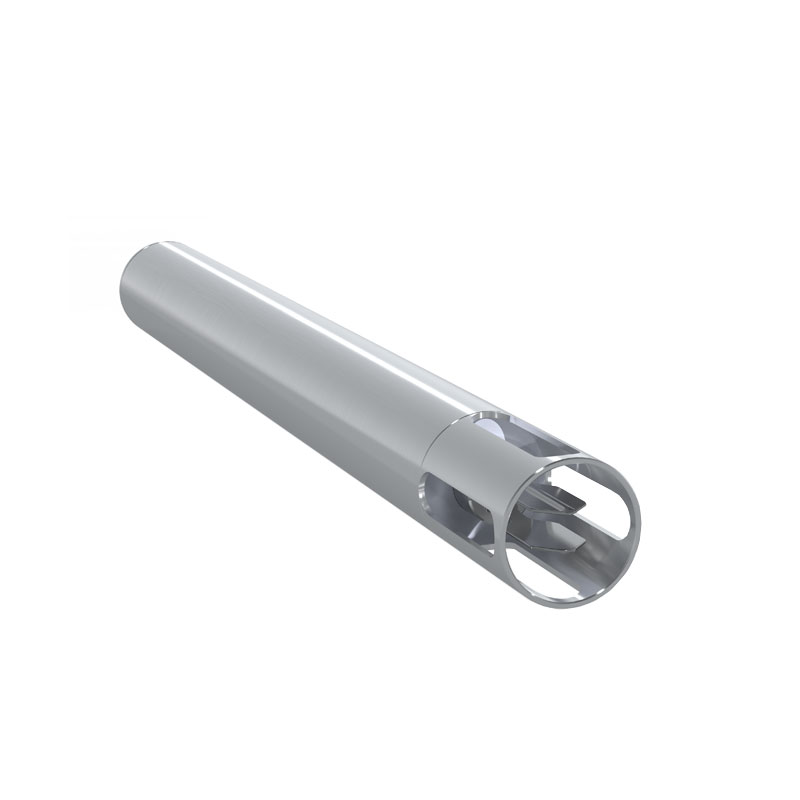
The Viscosity Sensor is an inline device designed for measuring fluid viscosity; it utilizes tuning fork resonance technology to deliver rapid response times. Capable of continuously monitoring changes in fluid viscosity, this device is widely deployed in the quality control stages of production across various industries, including petroleum, chemicals, coatings, food, and pharmaceuticals.
Viscosity is a critical parameter that directly reflects the intrinsic properties of a fluid. Viscosity measurement is extensively utilized across sectors such as petroleum, chemicals, coatings, food, and pharmaceuticals, playing a pivotal role in both production quality control and the performance evaluation of finished products. In the pharmaceutical industry, measuring liquid viscosity helps distinguish between—or verify—the purity levels of specific medications. In the field of petroleum exploration, accurate measurement of drilling fluid viscosity directly impacts drilling efficiency. Furthermore, within the petrochemical sector, viscosity is a decisive factor in assessing the quality and combustion performance of various lubricants.
Modern industrial processes demand increasingly high levels of real-time capability in viscosity measurement. Traditional offline detection methods—characterized by lengthy sampling cycles and data latency—struggle to meet the time-sensitive quality control requirements inherent in continuous production environments. The inline Viscosity Sensor was developed to address this need; it can be installed directly into pipelines or reaction vessels to provide uninterrupted, 24-hour monitoring of real-time fluid viscosity fluctuations. By employing tuning fork resonance technology, the Viscosity Sensor calculates viscosity values by detecting changes in the resonance state of an oscillating element immersed in the fluid, achieving a measurement accuracy of ±5% F.S. This capability allows the device to promptly capture even subtle fluctuations in fluid viscosity during production, thereby providing real-time data support for process adjustments.
Viscosity is highly sensitive to temperature variations; a temperature increase of just 1°C can result in a 5% to 10% reduction in viscosity. To eliminate the impact of temperature fluctuations on measurement accuracy, the inline Viscosity Sensor integrates a PT1000 temperature sensor for real-time temperature acquisition. The temperature signal is fed into a microcontroller (MCU) to adjust the calibration curve, automatically generating a corrected viscosity value normalized to a standard reference temperature. With this temperature compensation applied, the viscosity measurement accuracy remains within ±5% F.S., while the inherent measurement error of the PT1000 temperature sensor itself is less than 1°C. The online Viscosity Sensor viscometer is suitable for use in industries such as electric power, mining, cement, shipbuilding, defense, industrial manufacturing, papermaking, petrochemicals, transportation, metallurgy, aviation, oilfields, and ports. It can be selected for the viscosity measurement of various fluids—including coatings, adhesives with diverse bases, inks, food products, pharmaceuticals, chemical processing fluids, rubber compounds, and oils—enabling high-precision, rapid-response monitoring. The device's probe is constructed from 316L stainless steel and features an IP67 protection rating; it operates stably within a temperature range of -40°C to 120°C, thereby meeting the durability and anti-interference requirements of industrial field environments.
The operation of highways is significantly affected by meteorological conditions, and inclement weather such as fog, snowstorms, typhoons and heavy rains can pose a greater threat to driving safety. Under these conditions, the passage of highways may be obstructed or even closed, seriously affecting...
In the process of modern industrial production, the safety of the workshop environment is closely linked to the stability of production. Among them, detecting the concentration of VOC (Volatile Organic Compounds) has become a crucial part of daily workshop management, as many VOCs are flammable and...
Automatic ambient air quality monitoring station is an important branch in the field of environmental monitoring in China, which realizes environmental quality management by monitoring and analyzing atmospheric environmental quality. With the continuous development of China's economy and the inc...
With the rapid development of the Internet of Things, big data, and artificial intelligence technologies, our lives are undergoing a revolutionary change. The application of these technologies not only makes daily life more intelligent and convenient but also greatly improves efficiency and practica...


 Skype
Skype
 whatsapp
 mail
mail