Shandong Fengtu IOT Technology Co., Ltd
Sales Manager:Ms. Emily Wang
Cel,Whatsapp,Wechat:+86 15898932201
Email:info@fengtutec.com
Add:No. 155 Optoelectronic Industry Accelerator, Gaoxin District, Weifang, Shandong, China


Sales Manager:Ms. Emily Wang
Cel,Whatsapp,Wechat:+86 15898932201
Email:info@fengtutec.com
Add:No. 155 Optoelectronic Industry Accelerator, Gaoxin District, Weifang, Shandong, China
time:2025-04-28 09:35:00 source:Weather Station viewed:701 time
The monitoring of rainfall and water levels is crucial for flood prevention and disaster mitigation, water resources management, and urban drainage. Timely understanding of changes in rainfall and water levels can effectively prevent disasters such as floods and mountain torrents, ensuring the safety of people's lives and property. It can also optimize the allocation of water resources, avoid urban waterlogging, and maintain the normal order of production and daily life.
The FT-SW2 Rainfall and Water Level Alarm Instrument is an advanced monitoring device. It adopts K-band planar radar technology for non-contact measurement of water levels and rainfall, which is not affected by factors such as temperature and sediment, and is stable and reliable. The water level measurement range is 0 - 30 meters with an accuracy of ±1 cm, and the rainfall measurement range is 0 - 4 mm/min with an accuracy of ±0.2 mm. By combining with cross-section parameters to calculate the flow rate, it is not affected by environmental factors such as wind and haze, and is suitable for complex conditions. It can output multiple groups of data.
It is convenient to install and comes with flexible configuration software, enabling it to adapt to different scenarios. It has powerful data processing and transmission functions. The built-in algorithm can calculate and output real-time flow rate and cumulative flow rate. Equipped with a variety of signal output methods, it can form a monitoring system and support multi-platform monitoring. It operates reliably and stably, with low power consumption and a high protection level, adapting to harsh field environments and reducing maintenance costs.
It provides technical support for relevant work, helps with making decisions in advance, reduces disaster risks, and ensures the stability of social economy and the orderly life of the people. With the development of science and technology, such devices will continue to be improved to better cope with the challenges of hydrological changes.
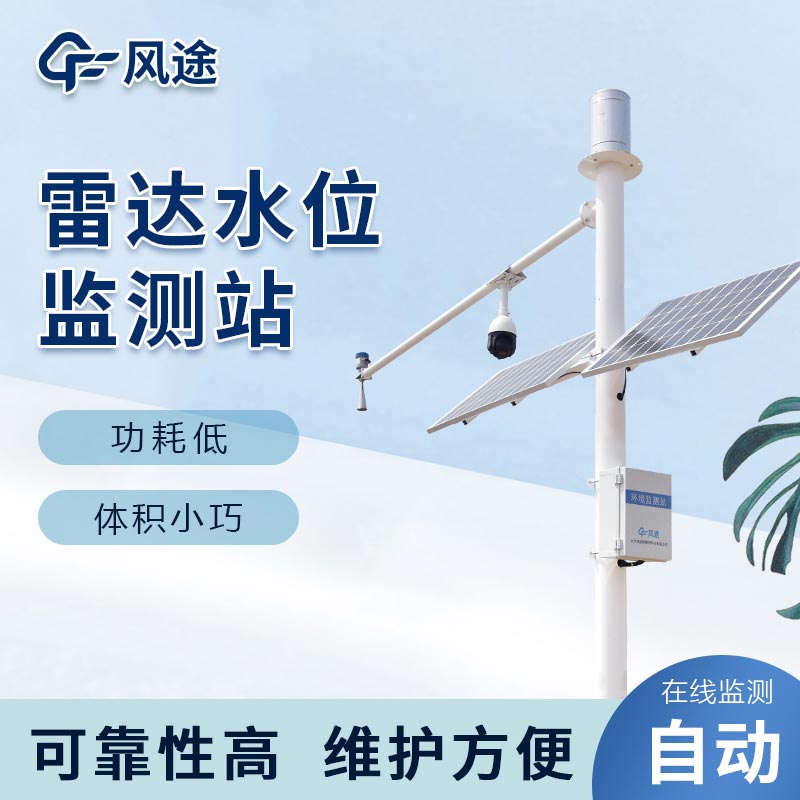
Video telemetry terminal is a microprocessor-controlled industrial intelligent gateway designed for hydrological, meteorological, and geological monitoring scenarios. It facilitates data acquisition and storage, multi-protocol communication, and remote control. Its low-power design supports solar po...
Archives, as places where important artefacts, materials and books are kept, cannot be overstated. A key factor in the deterioration of materials is a change in the temperature and humidity of the environment, which promotes the growth and reproduction of moulds. Therefore, in order to be able to pr...
Mechanical anemometer employs a structural design featuring a rotating impeller and a wind direction vane, enabling the real-time monitoring of changes in wind speed and direction. It offers a wind speed measurement range of 0–60 m/s with an accuracy of ±0.2 m/s, and a wind direction accurac...
Currently, the development of ice sensing technology is quite mature, with dozens of detection principles and methods available. According to differences in principles, ice sensors can be categorized into optical, electrical, mechanical, thermal, waveguide, and other types. Among them, the electrica...


 Skype
Skype
 whatsapp
 mail
mail