Shandong Fengtu IOT Technology Co., Ltd
Sales Manager:Ms. Emily Wang
Cel,Whatsapp,Wechat:+86 15898932201
Email:info@fengtutec.com
Add:No. 155 Optoelectronic Industry Accelerator, Gaoxin District, Weifang, Shandong, China


Sales Manager:Ms. Emily Wang
Cel,Whatsapp,Wechat:+86 15898932201
Email:info@fengtutec.com
Add:No. 155 Optoelectronic Industry Accelerator, Gaoxin District, Weifang, Shandong, China
time:2026-07-15 09:31:47 source:Weather Station viewed:45 time
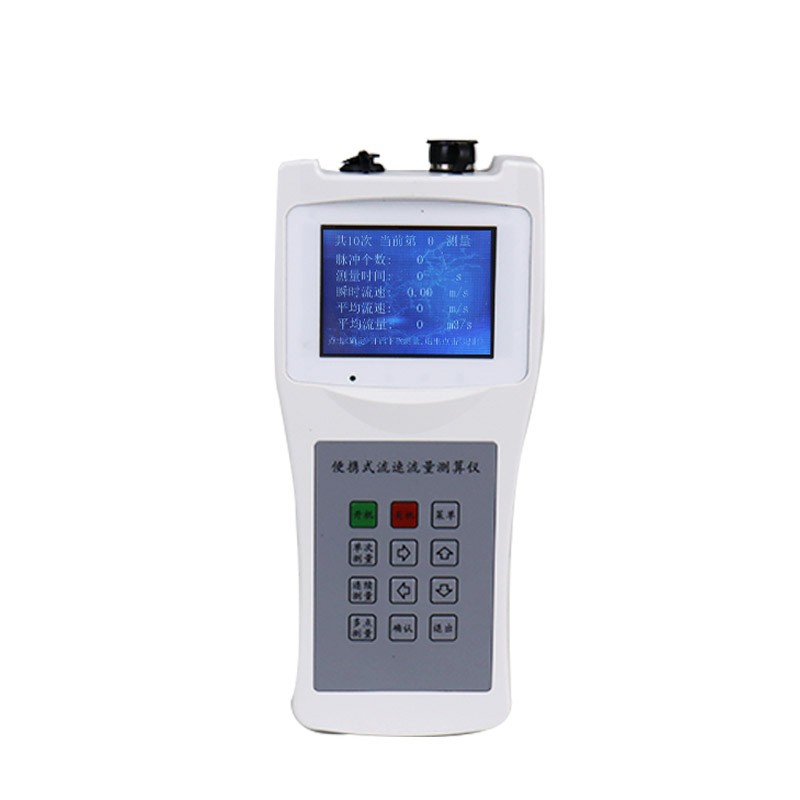
The portable flow velocity meter is a device developed for fieldwork in hydrological stations, factories, mines, environmental monitoring stations, farmland irrigation and drainage, and hydrogeological surveys to measure the flow velocity and flow rate of open channels. It features a starting speed of 0.03 m/s and a measurement error of ≤1.5%.
The portable flow velocity meter is a hydrological measurement device specifically developed for fieldwork in hydrological stations, factories, mines, environmental monitoring stations, farmland irrigation and drainage, and hydrogeological surveys to measure the flow velocity and flow rate of open channels. This device can be used with a flow velocity sensor, which has been redesigned in terms of propeller helix angle, pitch, manufacturing process, and materials. The device mainly consists of a flow velocity sensor, signal connector, flow velocity calculator, charging head, and data cable. The entire set of equipment can be housed in an aluminum alloy combination lock case for easy portability.
In terms of technical parameters, the portable flow velocity meter has a flow velocity sensor with an initial rotation speed of 0.03 m/s, a measurement range of 0.01 to 4.00 m/s (expandable to 5.00 m/s), a power supply voltage of 3.3V, a measurement error of no more than 1.5%, and a measurement depth of 410 mm. The flow velocity meter is equipped with a 6000mAh battery, a 5V 2.5A charger, a Type-C data interface, a 2.8-inch TFT screen, a data storage capacity of 6MB MSC, and an operating temperature range of 0℃ to 50℃.
This device measures flow velocity based on the velocity-area method (Q=V·S) used in open channel flow measurement. During flow velocity measurement, the flow meter, driven by water, generates a rotation signal through its built-in signaling device. Based on the total number of signals generated per unit time period, the average flow velocity is automatically calculated using the formula v=a+bR/T. Where v is the average flow velocity during the measurement period, b is the propeller hydraulic pitch, a is the current meter constant, T is the measurement duration, and R is the total number of revolutions of the current meter rotor during the T-period. For a specific current meter, b and a are constants; during flow measurement, only the values of T and R need to be measured to calculate the flow velocity. During flow measurement, the user inputs the type of the cross-section to be measured and manually inputs or uses auxiliary sensors to measure the water level and width of the regular cross-section to calculate the cross-sectional area. The instrument calculates the flow rate based on Q=VS.
The portable current meter is suitable for flow velocity monitoring in various water bodies such as rivers, channels, and pipelines. This device can also be used by firefighters to measure water velocity during water rescue operations, providing water information for commanders' rescue decisions. The device is small in size, lightweight, and easy to operate, and can measure flow velocity and flow rate in various outdoor environments and urban locations. The device adopts an ultra-low power consumption design and fully digital signal processing technology, ensuring stable and reliable measurements. Its waterproof and dustproof design allows it to adapt to field measurement work under various complex environmental conditions.
Currently, the development of ice sensing technology is quite mature, with dozens of detection principles and methods available. According to differences in principles, ice sensors can be categorized into optical, electrical, mechanical, thermal, waveguide, and other types. Among them, the electrica...
The quality of air directly affects people's lives and health. People can detect changes in air quality through their senses and take appropriate measures accordingly. Clean air helps to improve people's health and quality of life. Therefore, we should pay attention to the air quality proble...
Ultrasonic wind speed and direction sensors work by measuring the difference in propagation time of ultrasonic waves in different directions to determine wind speed and direction. Specifically:Ultrasonic waves have different propagation times in the downwind and upwind directions. When the wind is b...
These sensors calculate cyanobacteria concentration using the fluorescence excitation characteristics of phycocyanin, employing RS485 signal output and incorporating multiple anti-interference technologies. They are easy to install, have an IP68 protection rating, and are suitable for long-ter...


 Skype
Skype
 whatsapp
 mail
mail