Shandong Fengtu IOT Technology Co., Ltd
Sales Manager:Ms. Emily Wang
Cel,Whatsapp,Wechat:+86 15898932201
Email:info@fengtutec.com
Add:No. 155 Optoelectronic Industry Accelerator, Gaoxin District, Weifang, Shandong, China


Sales Manager:Ms. Emily Wang
Cel,Whatsapp,Wechat:+86 15898932201
Email:info@fengtutec.com
Add:No. 155 Optoelectronic Industry Accelerator, Gaoxin District, Weifang, Shandong, China
time:2026-07-03 10:04:52 source:Weather Station viewed:47 time
Marine meteorological monitoring instruments, also known as ship weather instruments, are specifically designed for the marine environment. They integrate six parameters—temperature, humidity, wind speed, wind direction, air pressure, and rainfall—into a single unit, enabling 24-hour continuous online monitoring and providing real-time meteorological data for ship navigation, anchoring, and berthing.
Marine meteorological monitoring instruments are professional meteorological monitoring systems designed specifically for the marine environment, playing an irreplaceable role in ship navigation, marine scientific research, and offshore operations. These devices, also known as ship weather instruments or shipborne weather instruments, are mainly used for observing meteorological elements on various ships, offshore oil drilling platforms, marine port meteorological stations, and in locations such as islands and ports.
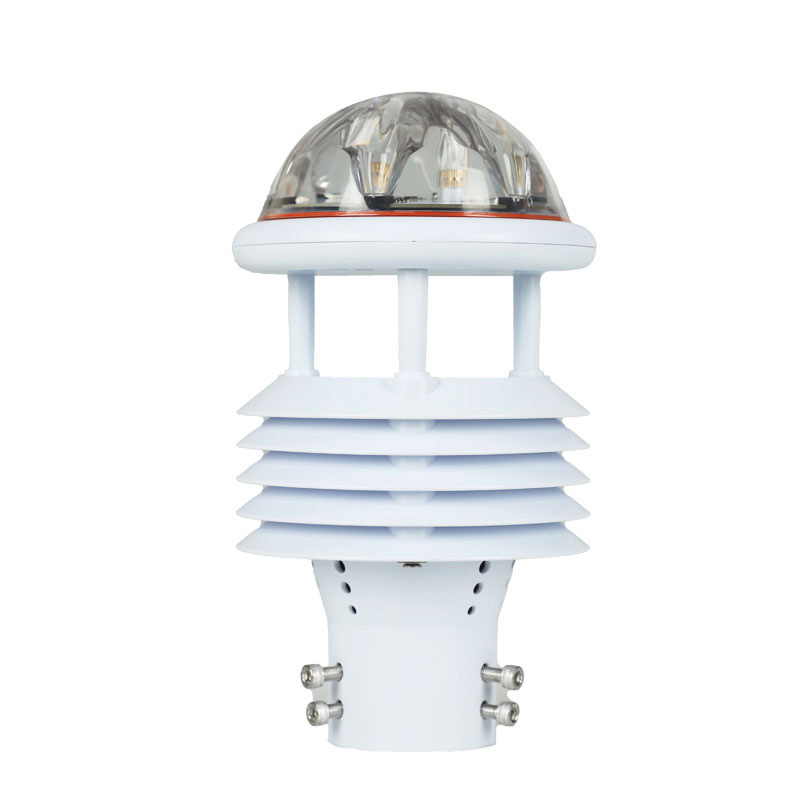
From a technical architecture perspective, current mainstream marine meteorological monitoring instruments generally adopt a highly integrated design. Taking the FT-WQX6 ship weather instrument as an example, this device innovatively integrates the six standard meteorological parameters through a highly integrated structure. These six parameters include ambient temperature, relative humidity, wind speed, wind direction, atmospheric pressure, and piezoelectric rainfall. Compared to traditional distributed sensors, the integrated design eliminates the need for on-site calibration, achieving maintenance-free operation. The device employs a top-cover concealed ultrasonic probe, effectively avoiding the impact of rain, snow accumulation, and wind obstruction on measurement accuracy. For data transmission, the device outputs six parameters to the user simultaneously via a digital communication interface, supporting the RS485 MODBUS protocol, and offers optional RS232, USB, Ethernet interfaces, and wireless transmission modules.
The measurement accuracy of marine meteorological monitoring instruments directly affects the navigation safety of ships. Wind speed measurement range is 0 to 60 meters per second, with an accuracy of ±0.1 meters per second; wind direction measurement range is 0 to 360 degrees, with an accuracy of ±2 degrees; air temperature measurement range is -40 to 60 degrees Celsius, with an accuracy of ±0.3 degrees Celsius; humidity measurement range is 0 to 100% relative humidity, with an accuracy of ±3%; atmospheric pressure measurement range is 300 to 1100 hPa, with an accuracy of ±0.25%. Real-time monitoring of these parameters is crucial for safe navigation, as weather changes directly affect a ship's navigation status.
The normal and efficient operation of marine meteorological monitoring instruments is directly related to the safety of ships at sea and the storage of raw data related to the marine environment. These instruments provide fundamental data support for my country's ocean research and development, as well as crucial data for weather forecasting and marine scientific research. With the continuous development of my country's marine economy and the increasing frequency of maritime activities, the value of marine meteorological monitoring instruments in ensuring navigation safety and improving operational efficiency will become even more prominent.
Multi-layer soil moisture monitor, based on the frequency domain reflection method in GB/T28418-2012 standard, measures soil moisture in each soil layer. The instrument adopts high-precision digital temperature sensor to monitor the temperature of each soil layer in real time. Users can customise di...
Soil Moisture Monitoring System is a GIS-based information management system, which is capable of real-time dynamic monitoring and management in the whole region. It is a soil moisture monitoring instrument suitable for use in agricultural production, scientific research and land resource management...
weather instrument is mainly used to monitor and record various physical parameters in the atmospheric environment. It is composed of meteorological data acquisition, transmission, analysis and processing system....
Which is the best ultrasonic wind speed and direction meter?From the meteorological aspect, the meteorological monitoring station should always monitor the wind speed and direction, guide people's travel, timely disaster warning. Military, such as the launch of artillery shells, snipers shooting...


 Skype
Skype
 whatsapp
 mail
mail